Military History
Sun Tzu's The Art of War: Key Principles Explained
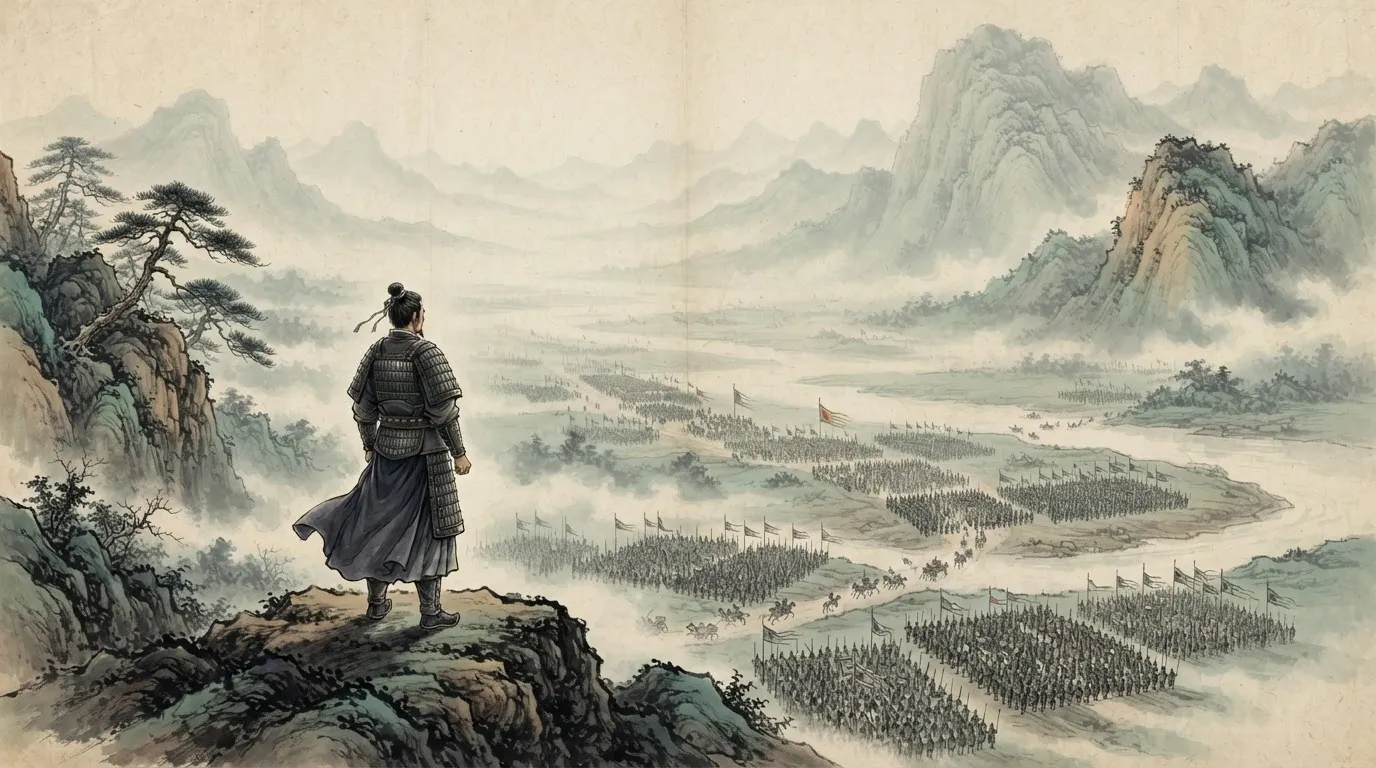
Written more than 2,500 years ago, The Art of War is one of the oldest and most influential military treatises in the world. Attributed to the Chinese general Sun Tzu, its roughly 13 chapters distill hard-won lessons about strategy, leadership, and conflict into terse, quotable maxims. Long after the wars it was written for have been forgotten, the text remains required reading at military academies and, more surprisingly, in business schools—proof that its core insights about competition, preparation, and human psychology have outlasted the battlefield conditions that produced them. Few books this short have been picked apart by so many generals, executives, and political theorists in search of an edge.
Who Was Sun Tzu?
Historical details about Sun Tzu are thin and debated. Traditional accounts place him in the late Spring and Autumn period of Chinese history, around the sixth century BC, serving as a general and strategist for the state of Wu. Some modern historians argue the text was compiled over time by multiple authors rather than written by a single historical figure, but the attribution to “Sun Tzu”—literally “Master Sun”—has stuck for over two millennia. The oldest surviving physical copies of the text, discovered on bamboo strips in a Han Dynasty tomb in 1972, confirm the work was already considered a finished classic by the second century BC.
The chief ancient source for Sun Tzu’s biography is the historian Sima Qian, whose Records of the Grand Historian (compiled around 91 BC) includes a colorful anecdote meant to demonstrate the strategist’s credentials. According to Sima Qian, King Helü of Wu, skeptical that Sun Tzu’s theories could be applied to real people, challenged him to turn 180 of the royal concubines into a disciplined military unit. When the women giggled instead of executing his commands, Sun Tzu had the king’s two favorite concubines—the appointed company commanders—put to death on the spot, over the king’s objections, to demonstrate that a general’s orders, once given, must be obeyed without exception. The remaining concubines, the story goes, then drilled in perfect silence. Most historians today treat this episode as a later legend rather than a factual account, but it endures because it captures, in miniature, one of the book’s most persistent themes: that discipline and clear command structure matter more than the raw material a general is given to work with.
Whether or not a single “Sun Tzu” ever lived exactly as Sima Qian described, the text that bears his name was clearly the product of a sophisticated military culture. The Spring and Autumn and subsequent Warring States periods were eras of near-constant conflict between rival Chinese states, and The Art of War reads like the accumulated field notes of that experience—terse, practical, and stripped of ornamentation.
The Text and Its Transmission
The Art of War (Chinese: Sunzi Bingfa) survives as a compact work of roughly 6,000 Chinese characters divided into 13 chapters, covering subjects ranging from strategic assessment and the cost of prolonged warfare to spies, terrain, and fire attacks. For centuries, scholars debated how much of the received text reflected an original core versus later additions and commentary from military thinkers of the Warring States period. That debate was substantially reshaped in 1972, when archaeologists excavating a Han Dynasty tomb at Yinqueshan, in modern Shandong province, uncovered bamboo-strip manuscripts of the text dating to roughly the 2nd century BC—centuries older than any previously known copy. The discovery confirmed that the core of the work had achieved something close to its familiar form well before the Han Dynasty standardized the text, and it settled some—though not all—arguments about later interpolations.
The text reached the West far later than its age might suggest. The French Jesuit missionary Jean Joseph Marie Amiot, stationed in Beijing, produced the first Western-language translation in 1772, rendering the work into French for a European audience newly curious about Chinese civilization. A popular legend holds that a young Napoleon Bonaparte read and was shaped by Amiot’s translation; the claim has circulated for well over a century, but historians who have closely studied Napoleon’s early military education have found no solid documentary evidence to support it, and Napoleon’s own writings point instead to French military theorists such as Pierre Bourcet as his acknowledged influences. It is best treated as an enduring legend rather than an established fact.
The version most familiar to English-language readers today is the translation by the British sinologist Lionel Giles, published in 1910, which remains in the public domain and is the source of most of the direct quotations still in wide circulation. Twentieth-century translations, notably U.S. Marine officer Samuel B. Griffith’s 1963 edition, added extensive historical and military commentary that helped introduce the text to a new generation of Western officers and strategists during the Cold War.
A brief timeline of the text:
- 6th–5th century BC: Traditional dating of Sun Tzu’s life and the composition of the core text, during China’s Spring and Autumn period.
- 2nd century BC: Bamboo-strip copies later recovered at Yinqueshan are buried in a Han Dynasty tomb, evidence the text already circulated in a form close to its modern one.
- 91 BC (approx.): Sima Qian’s Records of the Grand Historian records the traditional biography of Sun Tzu, including the concubine-training anecdote.
- 1772: Jean Joseph Marie Amiot publishes the first Western translation, in French.
- 1905: Everard Ferguson Calthrop publishes the first English translation.
- 1910: Lionel Giles publishes his English translation, still the most widely circulated public-domain edition.
- 1972: Archaeologists excavate Han-era bamboo-strip manuscripts of the text at Yinqueshan, confirming its early date and form.
Within China itself, the text was preserved and interpreted through a long commentarial tradition. The warlord and statesman Cao Cao, founder of the Wei kingdom during the turbulent Three Kingdoms period of the early 3rd century AD, wrote the earliest surviving commentary on the work, and his edition became the base text that most later Chinese readers actually encountered. By the Song Dynasty, printed editions commonly bundled Sun Tzu’s original chapters together with the notes of ten additional historical commentators—a compilation now referred to as the “Eleven Commentaries on Sun Tzu”—and the work was formally canonized as one of the Seven Military Classics used to examine and train imperial military officers. In other words, long before it became a fixture of Western business shelves, the text had already spent well over a thousand years as required, heavily annotated reading for a professional officer class.
Know Yourself and Know Your Enemy
Perhaps the most quoted line from the text—“If you know the enemy and know yourself, you need not fear the result of a hundred battles”—captures Sun Tzu’s central obsession with information and self-assessment. Long before modern intelligence agencies, Sun Tzu argued that victory depended less on brute force than on understanding relative strengths, weaknesses, terrain, and morale on both sides of a conflict.
The line is often quoted in isolation, but Sun Tzu immediately follows it with the harder, more useful half of the argument: “If you know yourself but not the enemy, for every victory gained you will also suffer a defeat. If you know neither the enemy nor yourself, you will succumb in every battle.” The formulation is structured as a graduated warning rather than a single piece of advice—partial knowledge produces a coin-flip war of attrition, and total ignorance produces certain defeat. Only the combination of accurate self-assessment and accurate assessment of the adversary produces anything like reliable success.
This idea has proven durable well outside its original context precisely because it does not depend on any particular weapon, army, or era. Modern military intelligence services, corporate competitive-analysis teams, and even sports coaching staffs operate on a version of the same logic: that a realistic accounting of one’s own capabilities, matched against a realistic accounting of a rival’s, is the foundation any workable strategy has to be built on.
The Five Factors
Sun Tzu opens the text not with tactics but with a framework for deciding whether and how to go to war at all. He argues that the “art of war is governed by five constant factors,” which every commander must understand before taking the field: the Moral Law, Heaven, Earth, the Commander, and Method and Discipline. In the Giles translation, Sun Tzu defines them this way: the Moral Law “causes the people to be in complete accord with their ruler, so that they will follow him regardless of their lives, undismayed by any danger”; Heaven covers “night and day, cold and heat, times and seasons”; Earth comprises “distances, great and small; danger and security; open ground and narrow passes; the chances of life and death”; the Commander embodies “wisdom, sincerity, benevolence, courage and strictness”; and Method and Discipline concern the organization of the army, the chain of rank, supply routes, and control of military expenditure.
What makes the framework notable is its breadth. A modern reader expecting a purely tactical checklist instead gets something closer to a national-strategy audit: political legitimacy and popular support (the Moral Law), timing and environmental conditions (Heaven), geography (Earth), leadership quality (the Commander), and organizational discipline (Method). Sun Tzu’s insistence that political cohesion between ruler and ruled belongs at the very top of the list—ahead of terrain, weather, and generalship—reflects a strikingly modern understanding that armies do not fight in a vacuum; they fight as extensions of the societies that field them.
Deception and Indirection
“All warfare is based on deception,” Sun Tzu wrote, arguing that a skilled commander appears weak when strong, and strong when weak, to keep an opponent off balance. The chapter that opens with this line goes on to list specific applications: feigning disorder to invite an overconfident attack, appearing distant when actually near, and baiting an enemy with the promise of easy gain. The underlying logic is that a commander who can manipulate what an adversary believes to be true gains an advantage without having to alter the underlying military reality at all—it is cheaper to mislead an enemy about your strength than to actually build that strength.
Sun Tzu paired this emphasis on deception with an equally strong emphasis on indirection—achieving objectives by an unexpected route rather than a predictable, head-on approach. “Attack him where he is unprepared, appear where you are not expected,” he advised, a principle that has been echoed by strategists from Carl von Clausewitz to 20th-century practitioners of maneuver warfare, even when they arrived at similar conclusions independently. He also emphasized adaptability over rigid planning—strategy should respond to changing terrain and circumstances rather than follow a fixed formula, since “water shapes its course according to the nature of the ground.” An army, in Sun Tzu’s metaphor, should have no more a fixed, unchanging form than water does; its “tactics” should be dictated afresh by the specific enemy and situation in front of it.
“All warfare is based on deception.” — Sun Tzu, The Art of War (Chapter I, trans. Lionel Giles)
Terrain
A substantial portion of The Art of War—including two full chapters, “Terrain” and “The Nine Situations”—is devoted to the practical business of reading and exploiting ground. Sun Tzu catalogued different types of terrain (accessible, entangling, temporizing, narrow passes, precipitous heights, and terrain at a distance from the enemy, among others) and prescribed different tactics for each, on the theory that geography was not a neutral backdrop to battle but an active variable a competent commander had to master as thoroughly as he mastered his own troops.
“The natural formation of the country is the soldier’s best ally,” Sun Tzu wrote, arguing that a general who understood terrain well enough could turn even a numerically inferior force into a decisive advantage—by forcing an enemy to fight uphill, through a defile, or across ground that fragmented their formations, for example. He was equally insistent that this was not optional knowledge: “The general who has attained a responsible post must be careful to study” the different forms of ground, since misjudging terrain could turn an otherwise sound plan into a disaster regardless of how well-trained or numerous the troops involved were. This chapter-length attention to geography is one of the clearest ways The Art of War distinguishes itself from more abstract treatments of strategy—Sun Tzu treats the physical battlefield as data to be analyzed, not scenery.
Speed and Tempo
Where Sun Tzu addresses the actual conduct of a campaign, he repeatedly returns to speed and unpredictability of movement as decisive advantages in themselves. In the chapter on maneuvering, he distilled the idea into one of the text’s most famous images: “Let your rapidity be that of the wind, your compactness that of the forest… In raiding and plundering be like fire, in immovability like a mountain.” The comparison—wind, forest, fire, mountain—was influential enough that it was later adopted almost verbatim as a battle standard, “Fūrinkazan,” by the 16th-century Japanese warlord Takeda Shingen, one of the clearest direct traces of Sun Tzu’s text on later East Asian military culture.
Sun Tzu treated tactical maneuvering itself as one of the hardest skills a commander could master, warning that “after that, comes tactical maneuvering, than which there is nothing more difficult,” precisely because the advantages of speed had to be weighed constantly against the risks of moving too fast for supply lines and cohesion to keep up. A full army moving together was too slow to seize fleeting opportunities, he noted, while a detachment fast enough to seize them risked outrunning its own logistics and support—a tension between speed and sustainability that remains a live problem in mechanized and even cyber warfare today.
Winning Without Fighting
Sun Tzu considered actual combat a last resort and a sign that a campaign had already gone poorly. “The supreme art of war is to subdue the enemy without fighting,” he wrote—favoring strategies that achieve objectives through positioning, deception, alliances, and psychological pressure rather than costly, destructive battles. In his ranking of strategic options, the best outcome was to defeat an enemy’s plans before they could be executed; next best was to disrupt an enemy’s alliances; only after those options were exhausted did he recommend attacking an enemy’s army in the field, and he ranked besieging fortified cities as the worst option of all, given the enormous cost in time, resources, and lives it demanded.
“The supreme art of war is to subdue the enemy without fighting.” — Sun Tzu, The Art of War (Chapter III, trans. Lionel Giles)
This idea of achieving strategic aims with minimal direct confrontation has influenced military thinkers and, later, business strategists who apply the same logic to competitive markets—the notion that maneuvering a rival into an untenable position is a more efficient path to victory than a costly, direct confrontation, whether that confrontation is fought with armies or with pricing wars and litigation.
The Importance of Preparation and Logistics
Long stretches of the text deal with unglamorous but essential topics: supply lines, the financial cost of prolonged campaigns, and the danger of wearing down one’s own resources through indecisive, drawn-out conflict. “An army without its baggage train is lost; without provisions it is lost; without bases of supply it is lost,” Sun Tzu wrote bluntly, rejecting any notion that tactical brilliance could substitute for the unglamorous work of keeping an army fed, equipped, and paid. Sun Tzu was clear that no army, however skilled, could function without disciplined logistics and a clear understanding of the economic burden of war—he devoted particular attention to the ruinous cost of a protracted campaign, warning rulers that “there is no instance of a country having benefited from prolonged warfare,” since drawn-out wars drained treasuries and invited opportunistic attacks from third parties while both original combatants exhausted themselves.
Leadership and Discipline
Sun Tzu placed heavy emphasis on the character of command—arguing, as part of his Five Factors, that a good general must combine wisdom, sincerity, benevolence, courage, and strictness. He also stressed that troops must be treated firmly but fairly, since an army that fears its own commander more than the enemy, or one that is undisciplined, is prone to collapse under pressure. The (probably legendary) story of Sun Tzu executing the King of Wu’s favorite concubines to enforce a training order, discussed above, was preserved by ancient chroniclers precisely because it dramatized this principle in its most uncompromising form: a general’s authority is only real if his orders are enforced without exception, even at high personal or political cost.
Sun Tzu was equally concerned with the opposite failure mode—rulers who undermined their own generals through political interference. He warned that a sovereign could bring misfortune upon his army in three ways: by ordering an advance or retreat without understanding that the army was not in a position to comply, by attempting to administer the army as he would administer a civilian kingdom (thus confusing the troops), and by employing officers without understanding the principles of military command. The underlying argument—that a competent general given a clear mandate must be allowed to exercise independent judgment in the field—became one of the text’s most frequently cited lessons by later officers chafing against political micromanagement of military operations.
The Use of Spies
The text’s final chapter is devoted entirely to espionage, reflecting Sun Tzu’s conviction that accurate intelligence was the foundation everything else in the book depended on. “Knowledge of the enemy’s dispositions can only be obtained from other men,” he wrote, dismissing the idea that omens, calculations, or analogy with past campaigns could substitute for direct human intelligence. He categorized spies into five types—local spies (recruited from an enemy’s own population), inward spies (enemy officials turned informants), converted spies (captured enemy agents turned to one’s own side), doomed spies (fed deliberately false information to pass on to the enemy), and surviving spies (who return with genuine intelligence)—and argued that a ruler who mastered the coordinated use of all five had access to something he called “divine manipulation of the threads,” an intelligence advantage no other resource could replace.
Sun Tzu went further than most ancient writers in insisting that spies be treated generously and rewarded well, on the grounds that reliable intelligence was worth more than almost any other expenditure a ruler could make—citing the enormous cost, in lives and treasure, of a prolonged war compared with the comparatively trivial cost of paying informants well. It is a strikingly unsentimental argument, and one of the clearest illustrations of the text’s broader philosophy: that hard-headed calculation of cost and benefit, rather than honor or convention, should drive a commander’s decisions.
Why The Art of War Still Matters
Unlike many ancient military texts, which are largely studied for historical interest, The Art of War is still actively applied. Military academies use it as a foundational text in strategic thinking—it has long formed part of the history curriculum at the United States Military Academy at West Point—and its principles about competitive positioning, information asymmetry, and calculated risk-taking have been widely adapted into business strategy, negotiation theory, and even sports coaching. Its brevity and aphoristic style make it endlessly quotable, but its lasting influence comes from a deeper insight: that success in any competitive endeavor depends more on preparation, positioning, and understanding your opponent than on raw force.
The text’s influence on 20th-century military and political history is especially well documented. Mao Zedong partially credited the ideas in The Art of War for informing his approach to guerrilla warfare during the Chinese Communist revolution, and Vietnamese general Vo Nguyen Giap—the strategist behind the campaigns that defeated first French and then American forces in Vietnam, including the decisive 1954 victory at Dien Bien Phu—was a close student of Sun Tzu’s principles of indirection and protracted conflict. Ho Chi Minh himself is said to have had the text translated for the study of his officers.
The book’s second life as a business and management text took off in the late 20th century, as executives and consultants began applying its language of positioning, information, and competitive advantage directly to corporate strategy. Business-strategy authors such as Mark McNeilly, whose books Sun Tzu and the Art of Modern Warfare and Sun Tzu and the Art of Business explicitly translate the text’s core principles into management terms, helped cement its place on corporate reading lists. Its crossover into wider popular culture—Michael Douglas’s character memorably invokes it in the 1987 film Wall Street—only reinforced an image of the text as a kind of universal handbook for competition, on the battlefield or off it.
Military commentators have also pointed to more recent conflicts as illustrations of Sun Tzu’s principles in practice. Analysts and veterans of the 1991 Gulf War have repeatedly cited the coalition’s Operation Desert Storm—which used a highly publicized amphibious threat along the Kuwaiti coast to fix Iraqi attention while the real armored thrust swung far to the west—as a large-scale, modern application of the deception and indirection Sun Tzu described some 2,500 years earlier. Whether or not planners were consciously working from the text, the campaign is regularly taught alongside it as an illustration of how old principles can resurface in thoroughly modern form.
Quick Facts
- Traditional author: Sun Tzu, general of the state of Wu
- Estimated period: 6th–5th century BC (Spring and Autumn period)
- Structure: 13 chapters covering strategy, terrain, deception, and leadership
- Oldest surviving copy: Bamboo strips found in a Han Dynasty tomb at Yinqueshan, discovered in 1972
- Standard English translation: Lionel Giles (1910), still the most widely available public-domain edition
- Key later readers: Mao Zedong, Vo Nguyen Giap, and generations of military academy cadets and business strategists
Frequently Asked Questions
Did Sun Tzu actually exist?
It’s genuinely uncertain. Traditional Chinese histories, chiefly Sima Qian’s Records of the Grand Historian, describe him as a real general who served the state of Wu in the 6th century BC. Some modern scholars accept a historical core to this account; others believe the text was compiled and edited by multiple hands over a longer period, with “Sun Tzu” functioning partly as a legendary authorial figure. The matter is unlikely ever to be settled definitively.
What are the 13 chapters of The Art of War about?
They cover, roughly in order: strategic planning and assessment, the costs of war, offensive strategy, tactical positioning, the use of momentum and energy, weak points and strong points, maneuvering an army, adapting to changing conditions (“variation in tactics”), marching and encamping an army, terrain, the nine varieties of ground a campaign might be fought over, attack by fire, and the use of spies.
Is The Art of War actually used by militaries today?
Versions of it appear on professional reading lists at military academies including West Point, and its concepts—deception, tempo, indirection, intelligence-gathering—remain part of how modern officers are taught to think about strategy, even though the specific tactical advice (chariots, fire attacks) is obviously obsolete. Its greater modern influence may be at the level of strategic thinking and decision-making frameworks rather than specific battlefield technique.
Why is The Art of War popular in business schools?
Because the text frames conflict primarily as a problem of information, positioning, and psychology rather than brute force—concepts that translate cleanly to competitive markets. Concepts like “winning without fighting,” understanding a rival’s capabilities before committing resources, and exploiting an opponent’s weak points have obvious analogues in corporate strategy, which is why business-adaptation books built directly on the text have found a steady audience since the 1980s.
What is the most famous line from The Art of War?
“If you know the enemy and know yourself, you need not fear the result of a hundred battles” is probably the most widely quoted line, though “All warfare is based on deception” and “The supreme art of war is to subdue the enemy without fighting” are both close behind in popularity and are frequently (and sometimes loosely) cited outside their original military context.
How long is The Art of War?
It is a remarkably short text—roughly 6,000 Chinese characters in the original, which typically runs to well under 100 pages in translated English editions, depending on how much commentary and annotation accompanies the core text.
Recommended Reading
Lionel Giles’s 1910 translation remains the most widely available public-domain English edition, while Samuel B. Griffith’s 1963 translation, published by Oxford University Press, is often praised for its historical annotations and context on ancient Chinese warfare. Readers interested in the text’s application beyond the battlefield may also want Mark McNeilly’s Sun Tzu and the Art of Business: Six Strategic Principles for Managers, which translates the work’s core concepts directly into a modern management framework.
Read Next
August 8, 2026
The Fall of the Roman Empire: How the World's Superpower Collapsed
Explore the military and political decline that led to the fall of the Western Roman Empire in 476 AD, from civil wars to barbarian invasions.
August 8, 2026
D-Day: Inside the Normandy Invasion of June 6, 1944
A look at the planning, landings, and lasting impact of the D-Day invasion of Normandy, the largest seaborne invasion in history.
August 8, 2026
The Battle of Thermopylae: How 300 Spartans Held the Line
How a small Greek force held off the Persian army at Thermopylae in 480 BC, and why the last stand of the 300 Spartans still resonates today.