Military History
D-Day: Inside the Normandy Invasion of June 6, 1944
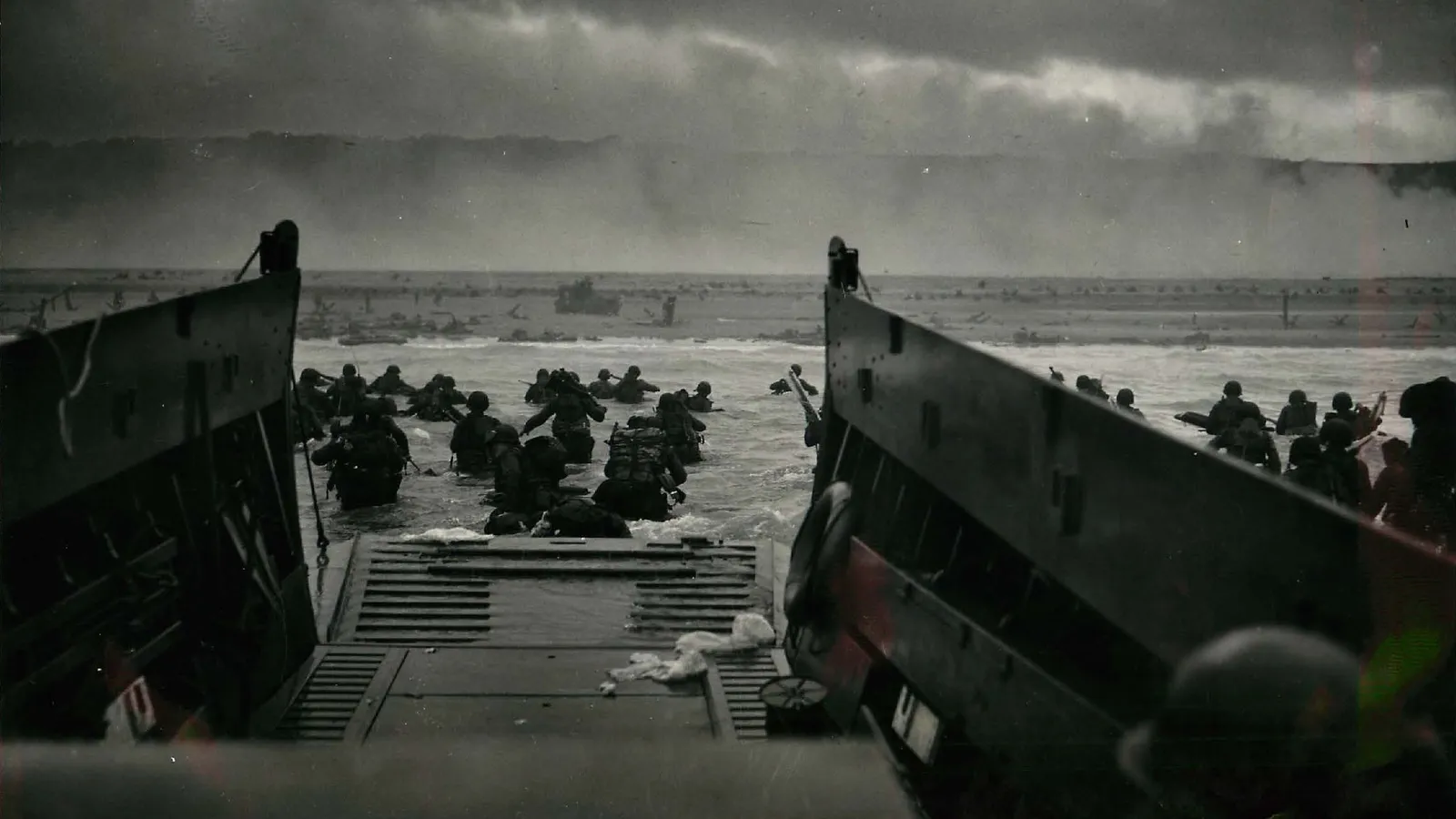
At dawn on June 6, 1944, more than 156,000 Allied troops began landing along a 50-mile stretch of the Normandy coast in the largest seaborne invasion in history. Codenamed Operation Overlord, with the amphibious assault itself known as Operation Neptune, D-Day marked the beginning of the campaign to liberate Western Europe from Nazi occupation. Nearly a year of planning, deception, and logistics culminated in a single, brutal morning that changed the course of World War II.
Behind the scale of the operation—nearly 7,000 vessels, more than 11,000 aircraft, five landing beaches, and troops drawn from a dozen Allied nations—lay a simpler and more human story: tens of thousands of young soldiers, sailors, and airmen stepping off ramps, out of aircraft, and into a defended coastline they had trained for but never truly experienced. What they accomplished that morning, at appalling cost on some stretches of sand and remarkably light cost on others, opened the Western Front that would, over the following eleven months, end in Germany’s surrender.
Setting the Stage
By 1944, Germany had controlled most of Western Europe for four years. Allied leaders had long debated when and where to open a second major front against Hitler’s forces, and Normandy, in northern France, was ultimately chosen for its beaches and proximity to England, despite being farther from Germany than the more obvious crossing point at Calais. That distance became an asset: an elaborate deception campaign, Operation Fortitude, convinced German intelligence that the real invasion would land at Calais, using fake army camps, inflatable tanks, phantom radio traffic, and a fictitious army group nominally commanded by General George S. Patton to draw German reserves away from Normandy at the critical moment.
Under the overall command of General Dwight D. Eisenhower, Supreme Allied Commander, the Allies assembled an invasion force of unprecedented scale: nearly 7,000 vessels, over 11,000 aircraft, and troops from the United States, Britain, Canada, and other Allied nations, including Free French, Polish, Norwegian, and other exile forces. The invasion had originally been planned for June 5 but was delayed a day due to poor weather—a decision that, ironically, helped achieve surprise, since German commanders judged the conditions too rough for a landing. Field Marshal Erwin Rommel, responsible for coastal defenses in the region, was so confident no invasion would come in such weather that he left for Germany to celebrate his wife’s birthday and was not present when the landings began.
Eisenhower’s decision to proceed rested on a narrow weather window identified by his meteorological team, led by British Group Captain James Stagg, who forecast a brief break in the storms that had battered the Channel for days. Eisenhower gave the order to go, aware that postponing again risked losing the correct combination of moon and tide conditions for weeks. He also prepared for the possibility of catastrophe. On the night before the invasion, he drafted a short note to be released in case the landings failed, taking full personal responsibility:
“Our landings in the Cherbourg-Havre area have failed to gain a satisfactory foothold and I have withdrawn the troops. My decision to attack at this time and place was based upon the best information available. The troops, the air and the Navy did all that bravery and devotion to duty could do. If any blame or fault attaches to the attempt, it is mine alone.” — General Dwight D. Eisenhower, handwritten note, June 5, 1944
He never had to use it. The note, misdated “July 5” in Eisenhower’s exhaustion, survived in his pocket and is now preserved at the Eisenhower Presidential Library.
Much of what Allied planners knew about the risks of a cross-Channel assault came from painful experience. A 1942 raid on the French port of Dieppe, intended partly as a reconnaissance-in-force to test German coastal defenses, had ended in catastrophe, with roughly 73 percent of the mostly Canadian troops involved killed, wounded, or captured. Planners drew several hard lessons from Dieppe that shaped Overlord directly: the near impossibility of seizing a heavily defended port intact, which led to the decision to land on open beaches and bring portable harbor facilities with the invasion force rather than fight for an existing port; the necessity of overwhelming naval and air support before troops ever touched the sand; and the need for specialized armor and landing craft purpose-built for the specific challenges of an opposed beach landing.
Key Commanders on Both Sides
The Allied command structure for Overlord reflected the coalition nature of the operation. Eisenhower held overall command as Supreme Allied Commander, with British General Bernard Montgomery commanding Allied ground forces for the invasion phase, responsible for the detailed planning of the landings themselves. Beneath them, each beach and airborne operation had its own national commanders: American General Omar Bradley led U.S. First Army at Utah and Omaha, while British and Canadian forces at Gold, Juno, and Sword fell under Montgomery’s more direct ground command. Admiral Bertram Ramsay commanded the naval component, Operation Neptune, responsible for the extraordinarily complex task of moving and landing the invasion force safely across the Channel, and Air Chief Marshal Trafford Leigh-Mallory commanded the Allied air forces that would provide cover, bombard German defenses, and drop the airborne divisions.
On the German side, command was split in ways that undercut the coherence of the defense. Field Marshal Gerd von Rundstedt served as Commander-in-Chief West, while Field Marshal Erwin Rommel, the celebrated “Desert Fox” of the North African campaign, commanded Army Group B along the invasion coast itself. Hitler retained personal control over the release of several key armored reserve divisions, meaning that even Rommel and Rundstedt could not commit Germany’s most powerful counterattack force without authorization from Berlin—authorization that, on the morning of June 6, was delayed for critical hours partly because Hitler was asleep and staff members were reportedly reluctant to wake him, and partly because German high command remained genuinely uncertain whether Normandy was the main invasion or a diversion ahead of a larger landing at Calais.
The Atlantic Wall: Germany’s Coastal Defense
Germany had spent years fortifying the coastline of occupied Europe against exactly this kind of invasion, building what propaganda called the Atlantic Wall—a network of some 15,000 reinforced-concrete bunkers, gun emplacements, and obstacles stretching from Norway to the Spanish border. By early 1944, German forces in France and the Low Countries numbered roughly 50 to 58 divisions, with well over half a million men stationed in the region, though a large share of these were static coastal-defense units of uneven quality rather than the mobile, battle-hardened divisions held in reserve further inland.
Command of the defense was divided in a way that would hamper the German response once the invasion began. Field Marshal Gerd von Rundstedt held overall command in the west, favoring a strategy of holding armored reserves inland and counterattacking wherever the Allies actually landed. Rommel, who commanded Army Group B along the invasion coast, disagreed sharply, arguing that Allied air superiority would make it impossible to move reserves quickly once a landing began, and that the invasion had to be defeated on the beaches themselves, in the first hours. The two men never fully reconciled their approaches, and the resulting compromise—some armored divisions held near the coast, others kept in reserve under Hitler’s personal authorization to release—meant German armor was neither positioned to crush the landings immediately nor concentrated for a decisive counterattack once they succeeded. Hitler, moreover, remained convinced for weeks after June 6 that Normandy was a diversion and that the main Allied blow would still fall at Calais, a belief Fortitude’s deception measures actively reinforced.
Operation Fortitude: Deceiving Hitler
Few elements of the Overlord planning mattered as much as the deception operation built to protect it. Operation Fortitude was actually two linked schemes: Fortitude North, which used fabricated radio traffic and notional troop movements to suggest a threat against Norway, and Fortitude South, the more consequential effort, which invented an entire phantom army group—the First United States Army Group, nominally commanded by General George S. Patton, a leader German intelligence rated highly—supposedly poised in southeast England to strike at the Pas-de-Calais, the shortest crossing point across the Channel and the location German planners most expected an invasion to target.
The deception combined dummy tanks, landing craft, and vehicles built from inflatable rubber and wood; fake radio networks generating the communications traffic of divisions that did not exist; and double agents feeding false reports back to German intelligence through networks that Britain’s counterintelligence service had turned or fabricated from the start of the war. The plan’s success is difficult to overstate: even after the Normandy landings were underway, German commanders, including Hitler himself, remained convinced for weeks that Normandy was a feint and that Patton’s fictitious army group would soon strike at Calais, a belief that kept the German Fifteenth Army—a powerful force of roughly 150,000 men—largely idle north of the Seine while the real battle for Normandy was decided.
The Airborne Assault
Hours before the seaborne landings began, paratroopers from the American 82nd and 101st Airborne Divisions and the British 6th Airborne Division dropped behind enemy lines under cover of darkness to secure bridges, roads, causeways, and artillery positions ahead of the amphibious assault. The drops were badly scattered by cloud cover, anti-aircraft fire, and pilot inexperience—many American paratroopers landed miles from their intended drop zones, isolated in small groups across the Norman countryside. Paradoxically, this scattering helped confuse German defenders about the scale and direction of the attack even as it disrupted Allied unit cohesion on the ground.
British paratroopers achieved one of the operation’s cleanest early successes, seizing the vital bridges over the Caen Canal and the Orne River—later renamed Pegasus Bridge—in a glider-borne coup de main assault that secured the Allies’ eastern flank within minutes of landing. American paratroopers, despite their scattered drops, succeeded in disrupting German communications and reinforcements throughout the night, and small, improvised groups of soldiers from different units fought their way toward their objectives, seizing causeway exits behind Utah Beach that proved critical to the beach landings that followed at dawn.
The Landings Begin
The invasion targeted five beaches, code-named Utah, Omaha, Gold, Juno, and Sword, each assigned to different national forces: American troops at Utah and Omaha, British forces at Gold and Sword, and Canadian troops at Juno. The assault was preceded by a massive naval and aerial bombardment intended to soften German coastal defenses, though the effectiveness of this bombardment varied enormously by beach, with poor visibility and the need to avoid hitting incoming landing craft causing much of the aerial bombing at Omaha in particular to fall too far inland to damage the defenses that mattered most.
At Utah Beach, strong currents pushed the first landing craft roughly a mile south of their intended target, onto a stretch of coast that was, by chance, more lightly defended than the planned landing zone. American troops of the 4th Infantry Division came ashore against relatively light resistance, and Utah recorded the lightest casualties of any of the five beaches. At Gold, Juno, and Sword, British and Canadian forces faced stiffer resistance than Utah but fought through German defenses methodically, pushing inland by the end of the day, with Canadian troops at Juno advancing farther inland on D-Day than any other Allied force.
Omaha Beach: The Costliest Landing
Omaha Beach saw the fiercest resistance of the entire operation. American troops of the 1st and 29th Infantry Divisions faced well-entrenched German defenders positioned on high bluffs overlooking the beach, supported by a German infantry division whose unexpectedly strong presence in the sector had not been fully anticipated by Allied intelligence. The preliminary naval and aerial bombardment had failed to knock out the bluff-top defenses, and the first waves of American infantry, wading ashore through deep water and exposed sand under machine-gun and artillery fire, suffered severe casualties before they even reached the seawall.
Combined American losses at Omaha on D-Day are generally estimated at around 2,000 to 2,400 men killed, wounded, and missing, making it by far the costliest of the five beaches—so costly that some commanders offshore briefly considered abandoning the landing altogether. It was small groups of soldiers, often led by individual officers and non-commissioned officers improvising under fire rather than following the original battle plan, who eventually found gaps in the defenses and fought their way up the bluffs. Brigadier General Norman Cota, moving along the beach to rally disorganized troops, is widely credited with a exchange, recorded in multiple postwar accounts, in which he asked a group of Army Rangers what unit they belonged to and, on hearing the reply, urged them forward with words that became the Rangers’ enduring motto:
“Well, goddamn it then, Rangers, lead the way!” — Brig. Gen. Norman Cota, Omaha Beach, June 6, 1944
To the west of Omaha, a smaller but equally harrowing action unfolded at Pointe du Hoc, where roughly 225 U.S. Army Rangers of the 2nd Ranger Battalion, under Lieutenant Colonel James Earl Rudder, scaled 100-foot cliffs under direct enemy fire to destroy a German artillery battery believed to threaten both Omaha and Utah beaches. The Rangers found that the guns had already been withdrawn and repositioned inland, which they located and disabled, but the mission came at an extraordinary cost: roughly 70 percent of the force that landed became casualties over the following two days of fighting to hold the position against German counterattacks.
The German Response
German reaction to the landings on June 6 was slower and more disjointed than either Rommel or Rundstedt would have wished, for reasons rooted directly in the divided command structure and Hitler’s insistence on personally controlling the release of armored reserves. Rundstedt requested the release of two panzer divisions held near Paris early on the morning of the landings, but because those divisions fell under the direct authority of the German high command rather than the western theater commanders, the request had to work its way up the chain to Hitler himself. Hitler did not learn of the invasion until after he woke, reportedly around midday, since his staff had been given standing orders not to disturb him, and it was not until roughly 4 p.m. that he authorized the release of two additional panzer divisions, the 12th SS and Panzer Lehr, for movement toward the coast—by which point Allied air power made daylight movement extremely costly for German armor.
The one significant German armored counterattack to reach the coast on D-Day itself came from the 21st Panzer Division, which had spent much of the day maneuvering near Caen before being ordered, in the late afternoon, to strike into a roughly two-mile gap that had opened between British forces landing at Sword Beach and Canadian forces at Juno. Elements of the division briefly reached the coast near the town of Lion-sur-Mer, the only German force to reach the English Channel that day, but with darkness falling, Allied naval gunfire and air attacks pressing them, and reports (later revealed to be mistaken) of further Allied airborne landings arriving behind them, the German force withdrew rather than risk being cut off. Historians have long treated the episode as a genuine missed opportunity for Germany, and one of several moments on June 6 where a small change in timing or decision-making might have produced a very different outcome.
Consolidating the Beachhead
By the end of June 6, Allied forces had established a foothold on French soil at all five beaches, though the individual beachheads were not yet connected into a single continuous front, and the fighting inland—through Normandy’s dense hedgerow country, known as the bocage, which favored defenders and slowed Allied armor for weeks—would continue for months rather than days. Total Allied casualties on D-Day itself are estimated at around 10,000, including approximately 4,400 confirmed dead, a toll spread unevenly across the five beaches and the airborne operations that preceded them.
In the days that followed, Allied engineers assembled two enormous prefabricated artificial harbors, codenamed Mulberry harbours, towed across the Channel in sections to allow the unloading of vehicles and supplies directly onto the invasion beaches before a deep-water port could be captured. One of the two, at Omaha, was wrecked by a severe Channel storm on June 19, but the other, at Gold Beach, remained in continuous use for months, ultimately helping land millions of tons of supplies, hundreds of thousands of vehicles, and millions of additional troops in the weeks after the initial assault. Combined with an undersea fuel pipeline system known as PLUTO (Pipe-Line Under The Ocean), these engineering projects reflected the same emphasis on logistics and improvisation that had characterized the invasion planning from the start.
On the evening of June 6, President Franklin D. Roosevelt addressed the American public in a radio broadcast structured as a prayer, asking the nation to join him in seeking divine protection for the invasion force:
“Almighty God: Our sons, pride of our Nation, this day have set upon a mighty endeavor, a struggle to preserve our Republic, our religion, and our civilization, and to set free a suffering humanity.” — President Franklin D. Roosevelt, radio address, June 6, 1944
Quick Facts
- Date: June 6, 1944
- Location: Normandy, France (Utah, Omaha, Gold, Juno, Sword beaches)
- Allied Commander: General Dwight D. Eisenhower
- Troops landed on D-Day: Roughly 156,000
- Estimated Allied casualties on D-Day: Around 10,000, including approximately 4,400 confirmed dead
Timeline of Key Events
- 1943: Allied leaders commit to a 1944 cross-Channel invasion at the Tehran Conference
- Early 1944: Operation Fortitude deception campaign begins, aimed at convincing Germany the invasion will target Calais
- June 5, 1944: Planned invasion date postponed 24 hours due to poor weather
- Night of June 5–6: Allied airborne divisions drop behind German lines in Normandy
- Dawn, June 6, 1944: Seaborne landings begin at Utah, Omaha, Gold, Juno, and Sword beaches
- June 6, evening: Allied forces hold beachheads at all five landing sites; President Roosevelt delivers his D-Day prayer broadcast
- June 19, 1944: A severe storm destroys the Mulberry harbour at Omaha Beach
- August 25, 1944: Paris is liberated
- May 8, 1945: Germany surrenders unconditionally, ending the war in Europe
Why D-Day Was a Turning Point
D-Day did not end the war, but it opened the Western Front that Allied planners had sought since 1942, forcing Germany to fight a two-front war against the Soviet Union in the east and the Western Allies advancing from Normandy. Over the following months, Allied forces broke out of Normandy in Operation Cobra, liberated Paris in August 1944, and continued their advance toward Germany, though the war in Europe would grind on for nearly another year, through the Battle of the Bulge and the final collapse of the Third Reich in the spring of 1945.
Historians widely regard the successful establishment of the Normandy beachhead as the moment the eventual Allied victory in Europe became far more likely, even though nearly a year of hard fighting remained. Eisenhower’s own Order of the Day, issued to every soldier, sailor, and airman under his command before the invasion began, captured the stakes as the Allies themselves understood them:
“You are about to embark upon the Great Crusade, toward which we have striven these many months. The eyes of the world are upon you.” — General Dwight D. Eisenhower, Order of the Day, June 6, 1944
The Breakout from Normandy
The weeks after D-Day were, in some respects, harder fought than the landings themselves. Allied forces found the bocage country of Normandy—a dense patchwork of small fields divided by earthen banks topped with thick hedgerows—ideally suited to German defense, since each hedge-lined field could be turned into a small fortified position that had to be cleared individually, often at heavy cost, while Allied tanks struggled to maneuver through or over the obstacles. It took American forces until late July to break through this terrain in Operation Cobra, a concentrated offensive west of Saint-Lô that finally opened the way for a rapid armored advance across France. German forces attempting to hold the line in Normandy were encircled and largely destroyed in the Falaise Pocket in mid-August, a defeat that shattered German military strength in the west and cleared the way for the liberation of Paris on August 25, 1944, and the rapid Allied advance toward the German border that followed through the autumn of 1944.
The Cost and the Legacy of Planning
The scale of planning behind D-Day—combining deception, logistics, airpower, naval bombardment, and combined-arms coordination across armies from multiple nations in a single operation—remains a reference point in military history and is still studied at war colleges for its lessons in joint operations. The operation also demonstrated the value of specialized engineering: everything from amphibious “swimming” tanks to armored bulldozers to the floating Mulberry harbours reflected years of technical preparation aimed at solving problems no army had faced at this scale before.
The human cost of that preparation, and of the day itself, is memorialized today across the Normandy coast, most visibly at the American Cemetery at Colleville-sur-Mer overlooking Omaha Beach, where thousands of white crosses and Stars of David mark the graves of soldiers who did not survive the campaign that began that morning. Normandy’s beaches, hedgerows, and small towns remain, more than eighty years later, a place where the physical traces of the invasion—German bunkers, preserved sections of Mulberry harbour, museums built around individual units and beaches—continue to draw visitors seeking to understand how that single day reshaped the war’s trajectory.
Frequently Asked Questions
What does “D-Day” actually mean?
“D-Day” was a generic military term used to designate the unspecified date on which an operation would begin, with “D” simply standing for “day”—the same convention used for any number of Allied operations throughout the war. Because the Normandy invasion became so historically significant, the term “D-Day” is now popularly associated almost exclusively with June 6, 1944, even though the military used the designation for other operations before and after it.
How many troops landed on D-Day itself?
Approximately 156,000 Allied troops landed in Normandy on June 6, 1944, combining seaborne forces across the five beaches with airborne troops dropped overnight. That figure grew rapidly in the days and weeks that followed as additional divisions and supplies came ashore through the beachheads and, later, the Mulberry harbours.
Which beach had the worst casualties?
Omaha Beach saw by far the heaviest American casualties of D-Day, with estimates generally in the range of 2,000 to 2,400 men killed, wounded, or missing, due to strong German defenses on the bluffs above the beach and the limited effectiveness of the preliminary bombardment in that sector. Utah Beach, by contrast, recorded the lightest casualties among the five landing beaches.
Why did the Allies choose Normandy instead of Calais?
Calais offered the shortest Channel crossing and was the location German commanders expected the invasion to target, which is precisely why the Allies chose Normandy instead. Normandy’s beaches were suitable for a large landing, and its relative distance from the obvious crossing point at Calais allowed the Operation Fortitude deception campaign to keep German reserves, including powerful armored divisions, tied down near Calais for weeks after the actual invasion began.
How did weather affect the invasion?
Poor weather forced Eisenhower to postpone the original June 5 invasion date by 24 hours, and the entire operation depended on a narrow break in the storms that had battered the English Channel. That same bad weather convinced several German commanders, including Rommel, that no invasion was imminent, contributing to weaker German readiness at the moment the landings actually began.
How long did the Battle of Normandy last after D-Day?
D-Day itself was only the opening phase of a much longer campaign. The wider Battle of Normandy continued for roughly ten weeks after the initial landings, through difficult fighting in the hedgerow country of the bocage, before Allied forces broke out of the beachhead in late July 1944 and advanced toward Paris, which was liberated on August 25, 1944.
Recommended Reading
- Cornelius Ryan, The Longest Day: June 6, 1944
- Stephen E. Ambrose, D-Day: June 6, 1944: The Climactic Battle of World War II
- Antony Beevor, D-Day: The Battle for Normandy
- Rick Atkinson, The Guns at Last Light: The War in Western Europe, 1944–1945
- Max Hastings, Overlord: D-Day and the Battle for Normandy
Read Next

August 8, 2026
The Battle of Thermopylae: How 300 Spartans Held the Line
How a small Greek force held off the Persian army at Thermopylae in 480 BC, and why the last stand of the 300 Spartans still resonates today.
August 23, 2026
The Battle of Borodino: Napoleon's Bloodiest Day in Russia
Napoleon's bloodiest day: inside the 1812 Battle of Borodino, the brutal fight for the flèches and Great Redoubt, and the road to Moscow's fall and ruin.
August 23, 2026
The Battle of Hattin: Saladin's Victory That Doomed the Crusader Kingdom
How Saladin lured the Crusader army into the waterless hills of Galilee in 1187, destroyed it at Hattin, and set up Jerusalem's fall three months later.