Military History
Genghis Khan and the Mongol Conquests
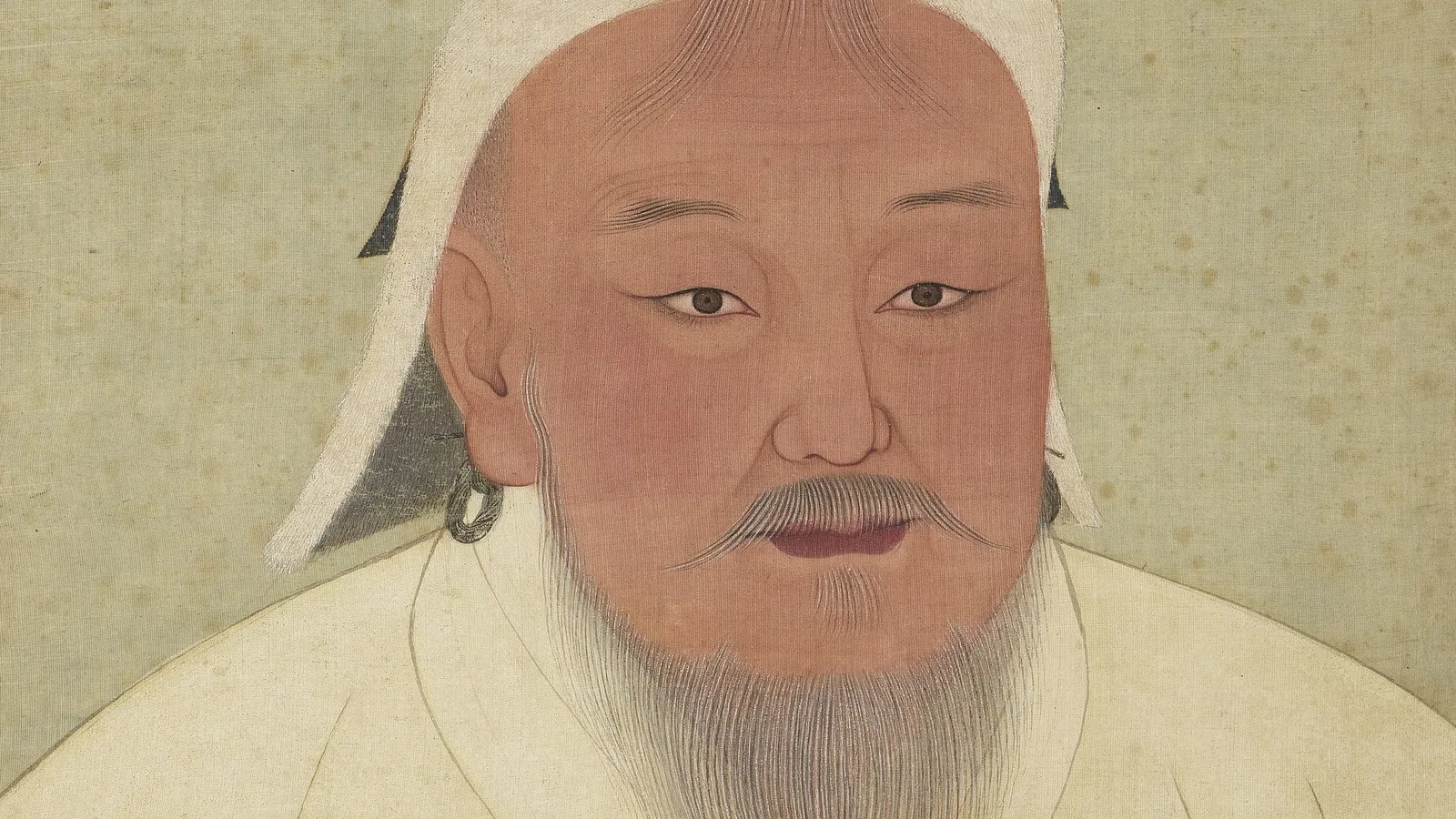
In little more than two decades, a unified Mongol nation under Genghis Khan built the largest contiguous land empire in human history, stretching from the Pacific coast of China to the shores of the Caspian Sea. His campaigns reshaped the political map of Asia and Eastern Europe, and the military methods he pioneered—speed, coordination, and psychological warfare—remain a reference point in the study of mobile warfare. Few figures in world history are so simultaneously revered and reviled: in Mongolia he is remembered as the founding father of the nation; across much of Central Asia, Persia, and the Middle East, the memory of his campaigns is inseparable from the destruction of entire cities and populations.
Quick Facts
- Born: c. 1162, on the Mongolian steppe
- Unified the Mongol tribes: 1206
- Died: August 1227, during the campaign against Western Xia
- Peak empire size: Roughly 9 million square miles, the largest contiguous land empire in history
- Military innovation: Highly mobile, disciplined cavalry armies organized on a decimal command system
The Steppe World Before Unification
To understand the scale of what Genghis Khan achieved, it helps to understand the world he was born into. Twelfth-century Mongolia was not a nation but a patchwork of rival nomadic and semi-nomadic tribal confederations—Mongols, Merkits, Tatars, Naimans, Keraits, and others—competing for control of pastureland, herds, and trade access across the harsh steppe and desert plateau of Inner Asia. Blood feuds ran for generations; alliances shifted constantly; and raiding, kidnapping, and assassination were ordinary instruments of tribal politics rather than aberrations. No tribe had ever succeeded in permanently uniting the steppe peoples under a single authority, and the settled civilizations bordering the steppe—Song and Jin China chief among them—had long found it easier to manage the Mongols and their neighbors by playing rival tribes against one another than by conquering them outright.
It was into this fractured, violent world that the man who would become Genghis Khan was born.
From Temüjin to Genghis Khan
Born around 1162 as Temüjin, the future Genghis Khan endured a brutal early life: his father, a minor tribal chief named Yesügei, was poisoned by rivals from the Tatar tribe when Temüjin was still a boy, and his family was subsequently abandoned by their own clan and left to survive on the Mongolian steppe without the protection of a tribe—a precarious existence that, according to the traditional accounts of his life, included seasons of genuine hunger and at least one period in which the young Temüjin was captured and enslaved by a rival clan before escaping.
Through a combination of alliances, ruthlessness, and military skill, Temüjin gradually rebuilt his family’s fortunes and began uniting the fractious, warring Mongol and Turkic tribes of the steppe. He first allied himself with Toghrul, khan of the powerful Kerait confederation and a sworn blood-brother (anda) of his late father, using that alliance to rebuild a following of his own. Over the following two decades, Temüjin fought and defeated a succession of rival tribal leaders and confederations—the Merkits, who had once kidnapped his wife Börte; the Tatars, his father’s killers; the Naimans; and eventually his former ally and patron Toghrul himself, after their alliance collapsed into open rivalry. Each victory brought captured warriors and their families under Temüjin’s direct authority, steadily expanding his following at the expense of the traditional tribal structures that had once made steppe unification impossible.
In 1206, a kurultai—a great council of the united tribal leaders of the steppe—proclaimed Temüjin ruler of all the Mongol and Turkic peoples under the title Genghis Khan, generally translated as “universal ruler” or “oceanic ruler,” though the precise etymology remains debated among scholars. The kurultai of 1206 marked the effective birth of the Mongol nation as a unified political and military entity, and it is this moment—not any single battle or conquest—that traditional Mongol historiography treats as the true founding event of the empire that followed.
A New Kind of Army
The Mongol military machine Genghis Khan built was radically different from the armies of the settled civilizations it would soon confront. Nearly the entire adult male population served as cavalry, with soldiers trained from childhood in horseback riding and mounted archery using powerful composite bows—constructed from laminated horn, wood, and sinew—effective from horseback at a full gallop and capable of outranging many contemporary infantry bows. Mongol boys grew up hunting on horseback as a matter of survival on the steppe, which meant that by the time they reached fighting age they already possessed skills that settled armies could only instill through years of dedicated military training.
Mongol armies moved with a speed that stunned their enemies, often covering 60 miles or more in a single day by maintaining strings of remount horses—each warrior typically traveled with several spare mounts, allowing the army to sustain a pace that no infantry-based or single-mount cavalry force of the era could match, and to appear where enemies believed such rapid movement to be impossible. This mobility was matched by logistical self-sufficiency: Mongol soldiers subsisted largely off dried meat, milk products, and whatever could be foraged or requisitioned along the march, freeing the army from the slow supply trains that constrained most contemporary military campaigns.
They employed sophisticated coordination between mounted archers, who harassed and wore down enemy formations from a distance with showers of arrows before withdrawing—a tactic Western observers sometimes mistook for retreat, only to be drawn into pursuit and ambush—and heavier lancer cavalry, who delivered decisive charges once the enemy was disorganized, exhausted, or lured out of a defensible formation. Mongol commanders also made extensive and highly effective use of feigned retreats, intelligence gathering through merchants and spies before a campaign began, and coordinated multi-pronged advances across enormous distances that converged on a single objective from several directions simultaneously, disorienting and dividing defenders who could not tell where the main blow would fall.
Organization, Discipline, and Innovation
Genghis Khan organized his forces on a rigid decimal system—units of 10 (arban), 100 (jaghun), 1,000 (mingghan), and 10,000 (tumen)—that enforced discipline and made rapid, coordinated maneuvers across huge distances possible even as the empire’s armies grew to encompass conquered peoples from dozens of different ethnic and tribal backgrounds. Crucially, this system deliberately broke up traditional tribal loyalties: soldiers from different clans and tribes were mixed together within the same units, with promotion and command based on demonstrated loyalty and competence rather than hereditary tribal status, which helped bind the new Mongol nation together and reduced the risk of the internal tribal rivalries that had characterized the pre-unification steppe.
The Yassa, a body of law and military regulation traditionally attributed to Genghis Khan, is said to have codified discipline within the army and Mongol society more broadly, though the exact content and even the existence of a single unified legal code of that name remain subjects of ongoing scholarly debate, since no complete text of the Yassa has survived and modern historians rely largely on later, secondhand references to reconstruct its likely provisions.
Genghis Khan was also notably willing to adopt foreign military technology and expertise rather than relying solely on traditional steppe warfare. As the Mongols encountered the fortified cities of northern China, Central Asia, and Persia, they incorporated Chinese and Persian siege engineers into their armies, employing trebuchets, battering rams, and other siege engines that allowed them to reduce heavily fortified cities that pure cavalry forces could never have taken. This willingness to integrate captured expertise and technology—alongside intelligence networks built on merchants and diplomats who traveled the trade routes bordering Mongol territory—gave Genghis Khan’s armies capabilities that went well beyond what steppe warfare alone could have produced.
“An action committed in the heat of the moment or on the spur of decision, without deliberation, without reviewing the end result… how can that be called right action?”
— attributed to Genghis Khan, recorded in Rashid al-Din’s Compendium of Chronicles (early 14th century)
Statements of this kind, preserved by the Persian court historian Rashid al-Din decades after Genghis Khan’s death and drawing on the recollections of Mongol elders, offer a window into the disciplined, calculating temperament that Mongol tradition attributed to its founder—though historians caution that such sayings, transmitted orally for generations before being written down, should be read as reflecting the values later Mongols associated with their founder rather than as verbatim transcripts of his speech.
Unifying the Steppe: Consolidating Power
Even after the kurultai of 1206 formally proclaimed him Genghis Khan, the new ruler faced the task of transforming a loose coalition of recently defeated rivals into a durable, unified state capable of sustained large-scale warfare. He redistributed conquered peoples and pastureland among loyal followers, elevated commanders based on merit and demonstrated loyalty rather than birth, and began building the administrative and logistical foundations—messenger relay systems, a rudimentary legal code, and a standing military organization—that would allow the Mongol state to project power far beyond the steppe itself. This consolidation phase, often overshadowed in popular accounts by the dramatic conquests that followed, was in many ways the more historically remarkable achievement: no previous steppe leader had managed to convert a battlefield coalition into a durable state capable of outliving its founder, and it was this institutional foundation, as much as any single tactical innovation, that allowed the Mongol Empire to continue expanding for decades after Genghis Khan’s own death.
The Conquest of Northern China
Beginning around 1207, Mongol armies turned first against the Western Xia kingdom, a Tangut state in northwestern China, subduing it through a series of campaigns that established a pattern the Mongols would repeat elsewhere: initial raids and probing attacks, followed by a full invasion once the target’s defenses and internal weaknesses had been assessed. Mongol forces then turned against the more powerful Jin dynasty, which controlled northern China, beginning a long campaign in 1211 that saw Mongol armies breach the fortified passes of the Great Wall and eventually capture the Jin capital at Zhongdu (near modern Beijing) in 1215, though full Mongol conquest of Jin territory would not be completed until years after Genghis Khan’s death.
These campaigns in northern China were significant beyond their immediate territorial gains: it was here that the Mongols first acquired the siege expertise, administrative personnel, and gunpowder-based weaponry that would prove decisive in later campaigns further west, and here that Genghis Khan first confronted, and began to develop solutions for, the fundamental problem facing any steppe conqueror—how a cavalry-based nomadic army could take and hold heavily fortified cities defended by populous, technologically sophisticated settled civilizations.
Conquest of the Khwarazmian Empire
The campaign that cemented Genghis Khan’s reputation for both military genius and extraordinary brutality was his invasion of the Khwarazmian Empire, a vast Muslim state controlling much of Central Asia and Persia, beginning in 1219. The war’s origins lay in a diplomatic catastrophe: Genghis Khan, seeking peaceful trade relations, had dispatched a caravan of merchants and envoys to Khwarazmian territory. At the frontier city of Otrar, the local governor, Inalchuq, had the caravan seized and its members executed as suspected spies—a decision made, according to most accounts, without authorization from the Khwarazmian shah, Ala ad-Din Muhammad II, who nonetheless refused to hand over the governor for punishment or otherwise make amends when Genghis Khan demanded satisfaction.
Genghis Khan responded with a campaign of total conquest. Mongol armies, advancing along multiple axes to prevent Khwarazmian forces from concentrating against any single column, overwhelmed the empire’s great cities in rapid succession: Otrar itself, besieged and destroyed in reprisal for the massacre of the merchant caravan; Bukhara, which fell in 1220 after Genghis Khan personally addressed its population inside the city’s great mosque, according to the Persian chronicler Ibn al-Athir, in words that have become among the most frequently cited attributed to him:
“O people, know that you have committed great sins, and that the great ones among you have committed these sins. If you ask me what proof I have for these words, I say it is because I am the punishment of God. If you had not committed great sins, God would not have sent a punishment like me upon you.”
— attributed to Genghis Khan at Bukhara, 1220, as recorded by the chronicler Ibn al-Athir
Samarkand, one of the great cities of the Islamic world and a center of learning and trade, fell after a brief siege the same year; and Urgench, the Khwarazmian capital, resisted for months before finally falling in 1221 after some of the fiercest street fighting the Mongols had yet encountered, reportedly requiring the diversion of the Amu Darya river to flood the city into submission. Casualty figures for the destruction of these cities are reported in medieval chronicles at levels historians now generally regard as exaggerated by the standards of the sources’ own conventions, but even conservative modern estimates describe death tolls in the tens of thousands to low hundreds of thousands across the campaign’s major sieges, along with the deliberate destruction of irrigation systems, libraries, and infrastructure that some regions of Central Asia are argued to have taken generations to recover from, if they recovered at all.
The scale and deliberate brutality of the Khwarazmian campaign was, by most historical accounts, a calculated instrument of policy rather than simple bloodlust: Genghis Khan and his commanders understood that cities which resisted and were subsequently destroyed served as object lessons that made other cities more likely to surrender without a fight, sparing Mongol forces the cost of additional sieges. This deliberate cultivation of terror as a strategic tool—encouraging rapid capitulation elsewhere by making the consequences of resistance unmistakably clear—became one of the defining and most controversial features of Mongol conquest, and it is central to why Genghis Khan’s historical memory in the regions he conquered differs so sharply from his reputation in Mongolia itself.
Terrain, Strategy, and the Logic of Steppe Warfare
The geography of Genghis Khan’s campaigns was inseparable from their success. The open steppe and semi-arid terrain of Central Asia, so different from the forests and mountains that had historically checked cavalry-based warfare in parts of Europe and East Asia, allowed Mongol armies to exploit their mobility advantage to the fullest, moving rapidly between objectives and choosing when and where to give battle. Where terrain did favor the defense—mountain passes, fortified cities, river crossings—Mongol commanders adapted rather than forcing costly frontal assaults: adopting captured siege technology for the cities of China and Khwarazm, using local guides and captured engineers to navigate unfamiliar terrain, and relying on intelligence gathered well in advance of any campaign to identify an enemy’s weaknesses before the first Mongol soldier crossed the frontier. This adaptability—as much as raw mobility or archery—distinguished Mongol warfare from that of earlier steppe nomads such as the Huns or the Xiongnu, whose campaigns against settled civilizations, while often devastating, rarely achieved the same degree of permanent territorial conquest and administrative consolidation.
Genghis Khan’s Final Campaign and Death
After completing the conquest of the Khwarazmian Empire around 1221, Genghis Khan turned his attention back east, launching a final campaign against the Tangut kingdom of Western Xia, which had refused to provide troops for the Khwarazmian campaign and had, in Mongol eyes, thereby committed an act of open defiance. It was during this campaign, in August 1227, that Genghis Khan died. The precise cause of his death has never been definitively established: traditional accounts offer competing explanations ranging from illness to injuries sustained after falling from his horse, and later legends—including one recorded by Marco Polo attributing his death to an arrow wound—add further uncertainty; some modern researchers have even proposed disease, including plague, as a possible cause. Mongol tradition held his death and burial site as a closely guarded secret, reportedly to prevent any interruption of the ongoing campaign against Western Xia and to protect his tomb from desecration, and despite extensive searching, historians and archaeologists have never conclusively located his grave.
- Key dates of the Mongol conquests:
- c. 1162 — Birth of Temüjin
- 1206 — Kurultai proclaims him Genghis Khan, uniting the Mongol tribes
- 1207–1210 — Campaigns against Western Xia begin
- 1211–1215 — War against the Jin dynasty; capture of Zhongdu (Beijing)
- 1219–1221 — Conquest of the Khwarazmian Empire, including Bukhara, Samarkand, and Urgench
- August 1227 — Death of Genghis Khan during the Western Xia campaign
- 1229 — Ögedei Khan formally elected as successor
- 1260s — Empire fragments into four khanates following succession disputes
Succession and the Empire After His Death
Genghis Khan had, in a departure from many steppe traditions, established a formal succession process before his death, designating his third son Ögedei as heir with the endorsement of a kurultai convened for the purpose, a decision intended to prevent the destructive succession wars that had often followed the deaths of earlier steppe leaders. Ögedei was formally confirmed as Great Khan in 1229, and under his leadership and that of his immediate successors, Mongol expansion continued at a remarkable pace: Mongol armies completed the conquest of the Jin dynasty in 1234, subjugated Korea, launched devastating campaigns into Russia and Eastern Europe that reached as far as Hungary and the outskirts of Vienna by 1241, and eventually conquered the Song dynasty in southern China by 1279 under Genghis Khan’s grandson Kublai Khan, who also founded the Yuan dynasty and ruled China as its emperor.
At its greatest territorial extent, reached decades after Genghis Khan’s death, the Mongol Empire covered roughly 9 million square miles, encompassing an estimated quarter of the world’s population at the time—an empire larger than any that had existed before it. That scale, however, ultimately proved difficult to sustain under unified central authority: succession disputes among Genghis Khan’s descendants, combined with the sheer logistical and administrative challenge of governing such a vast and culturally diverse territory, led to the empire’s gradual fragmentation from the 1260s onward into four increasingly independent khanates—the Yuan dynasty in China and Mongolia, the Chagatai Khanate in Central Asia, the Ilkhanate in Persia and the Middle East, and the Golden Horde in Russia and the western steppe—each ruled by different branches of Genghis Khan’s family and each following an increasingly separate political trajectory.
Governance Beyond Conquest
Alongside the destruction for which his campaigns are best remembered, Genghis Khan also established governing practices notable for the era, particularly a policy of broad religious tolerance across his expanding empire. Mongol rule generally exempted clergy of various faiths—Buddhist, Christian, Muslim, and Taoist alike—from taxation and military service, and Mongol administration made extensive use of literate officials and administrators drawn from conquered peoples, including Uyghur scribes who adapted their script to write the previously unwritten Mongolian language, and Khitan and Chinese bureaucrats who helped administer the settled territories the Mongols now controlled but had no tradition of governing directly. This pragmatic approach to administration—preserving and co-opting existing bureaucratic expertise rather than replacing it wholesale—allowed the rapidly expanding empire to govern vast, culturally diverse territories with a relatively small Mongol ruling class, and it stands in notable contrast to the wholesale destruction inflicted on cities that resisted conquest outright.
Why the Mongol Conquests Still Matter
The speed, coordination, and psychological warfare of Mongol campaigns—Genghis Khan deliberately cultivated a reputation for annihilating any city that resisted, in order to encourage swift surrender elsewhere—remain studied as an early example of what modern strategists would recognize as maneuver warfare and combined-arms coordination, executed centuries before mechanization made comparable speed possible again. Military historians and staff colleges continue to analyze Mongol campaigns for their lessons in operational tempo, deception, intelligence gathering, and the coordination of dispersed forces converging on a single objective—principles that would not be systematically articulated again in Western military thought until the twentieth century.
Beyond the battlefield, the Pax Mongolica that followed the conquests stabilized trade routes across Eurasia, reconnecting East and West along a secured Silk Road and facilitating an exchange of goods, technology, and ideas between civilizations that had previously had only limited contact. Under Mongol rule, merchants, missionaries, and travelers—including, famously, the Venetian trader Marco Polo—could cross thousands of miles of formerly dangerous and fragmented territory under a single, if loosely administered, political and legal umbrella, an exchange of goods and ideas that some historians credit with helping to lay groundwork for later developments in trade, cartography, and cross-cultural contact between Asia and Europe. At the same time, that same interconnectedness is understood to have facilitated the westward spread of the bubonic plague along Mongol-controlled trade routes in the fourteenth century, contributing to the Black Death that would go on to kill a substantial share of Europe’s population—a grim reminder that the same infrastructure of conquest and connection cut both ways.
Genghis Khan’s legacy today remains genuinely contested rather than settled. In Mongolia, he is celebrated as the founder of the nation and a symbol of Mongolian identity and sovereignty, his image ubiquitous on currency, monuments, and public life since the end of Soviet-era restrictions on his commemoration. Across much of the territory his armies conquered, by contrast, his name remains associated first and foremost with devastation, and historians continue to debate the overall demographic and civilizational toll of the conquests, with estimates of total deaths across the decades of Mongol expansion ranging enormously depending on methodology and region. What is not in serious dispute is the scale of what he built: a unified steppe nation, a military system that redefined the limits of premodern mobile warfare, and an empire whose administrative and commercial legacy shaped Eurasian history for centuries after his death.
Frequently Asked Questions
What does the title “Genghis Khan” actually mean?
“Genghis Khan” is generally translated as “universal ruler” or “oceanic ruler,” a title conferred on Temüjin by the kurultai, or great council, of Mongol and Turkic tribal leaders in 1206 when they proclaimed him ruler of the newly unified steppe peoples. The precise linguistic origin and exact meaning of “Genghis” remain subjects of scholarly debate, though “universal ruler” is the most widely cited English rendering.
How large was the Mongol Empire at its height?
At its greatest extent, reached decades after Genghis Khan’s death under his successors, the Mongol Empire covered roughly 9 million square miles—the largest contiguous land empire in human history—stretching from the Pacific coast of China across Central Asia and Persia into Russia and Eastern Europe, and encompassing an estimated quarter of the world’s population at the time.
Why were the Mongols so militarily effective against larger, wealthier civilizations?
The Mongols combined a lifetime of horsemanship and mounted archery skill, born of the demands of steppe life, with a highly disciplined decimal-based command structure, extraordinary logistical mobility through the use of remount horses, and a willingness to adopt captured siege technology and expertise from conquered peoples. This combination let them outmaneuver, outpace, and eventually out-besiege armies that were often individually larger or better equipped for conventional warfare of the period.
Did Genghis Khan really order the destruction of entire cities?
Yes—cities that resisted Mongol demands for surrender, particularly during the Khwarazmian campaign of 1219–1221, were sometimes destroyed with mass killing of their populations, a policy medieval chroniclers describe in cities such as Otrar and Urgench. Historians generally interpret this brutality as a deliberate strategic tool intended to terrorize other cities into surrendering without resistance, though exact casualty figures reported in medieval sources are widely regarded by modern historians as exaggerated.
How did Genghis Khan die, and where is he buried?
The exact cause of Genghis Khan’s death in August 1227, during a campaign against the Tangut kingdom of Western Xia, has never been conclusively established; traditional explanations range from illness to injuries from a fall from his horse. His burial site was deliberately kept secret by his followers, and despite extensive searching over the centuries, it has never been definitively located.
What happened to the Mongol Empire after Genghis Khan died?
Genghis Khan’s designated heir, his son Ögedei, was confirmed as Great Khan in 1229, and Mongol expansion continued for decades under his successors, eventually encompassing China, Korea, Central Asia, Persia, and parts of Russia and Eastern Europe. From the 1260s onward, however, succession disputes and the sheer scale of the empire led it to fragment into four largely independent khanates ruled by different branches of Genghis Khan’s descendants.
Recommended Reading
Jack Weatherford’s Genghis Khan and the Making of the Modern World offers an accessible, influential reassessment of his legacy, while Timothy May’s The Mongol Art of War focuses specifically on the military organization and tactics behind the conquests. John Man’s Genghis Khan: Life, Death, and Resurrection combines historical narrative with the author’s own travels across Mongolia and China in search of physical traces of the khan’s life and legend. Frank McLynn’s Genghis Khan: His Conquests, His Empire, His Legacy provides a detailed, critically engaged single-volume account of the full sweep of his campaigns and their aftermath.
Read Next
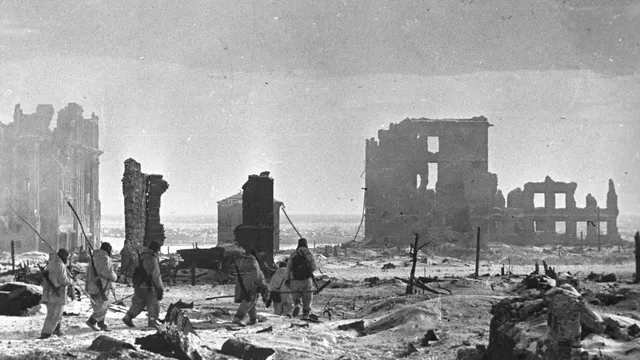
August 8, 2026
The Battle of Stalingrad: The Turning Point of World War II's Eastern Front
How the brutal battle for Stalingrad in 1942-43 destroyed a German army and turned the tide of World War II in Europe.
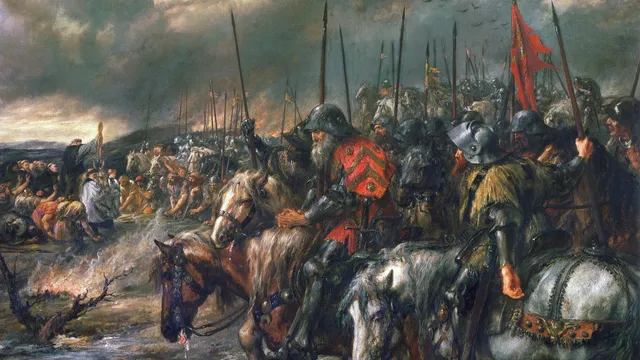
August 8, 2026
The Battle of Agincourt: Longbows Against Chivalry
How a small, exhausted English army under Henry V destroyed a much larger French force at Agincourt in 1415.
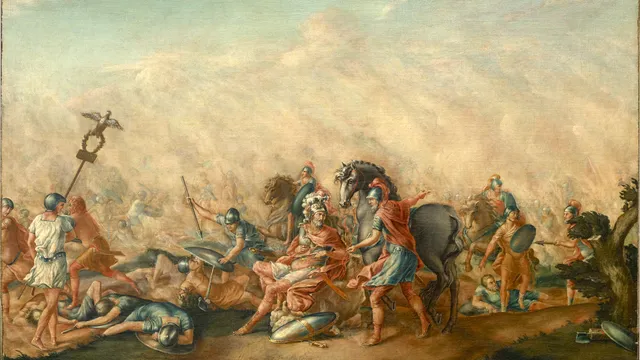
August 8, 2026
The Battle of Cannae: Hannibal's Perfect Victory
How Hannibal's double envelopment at Cannae in 216 BC destroyed a much larger Roman army and became history's model encirclement.