Military History
The Fall of Constantinople: The End of the Byzantine Empire
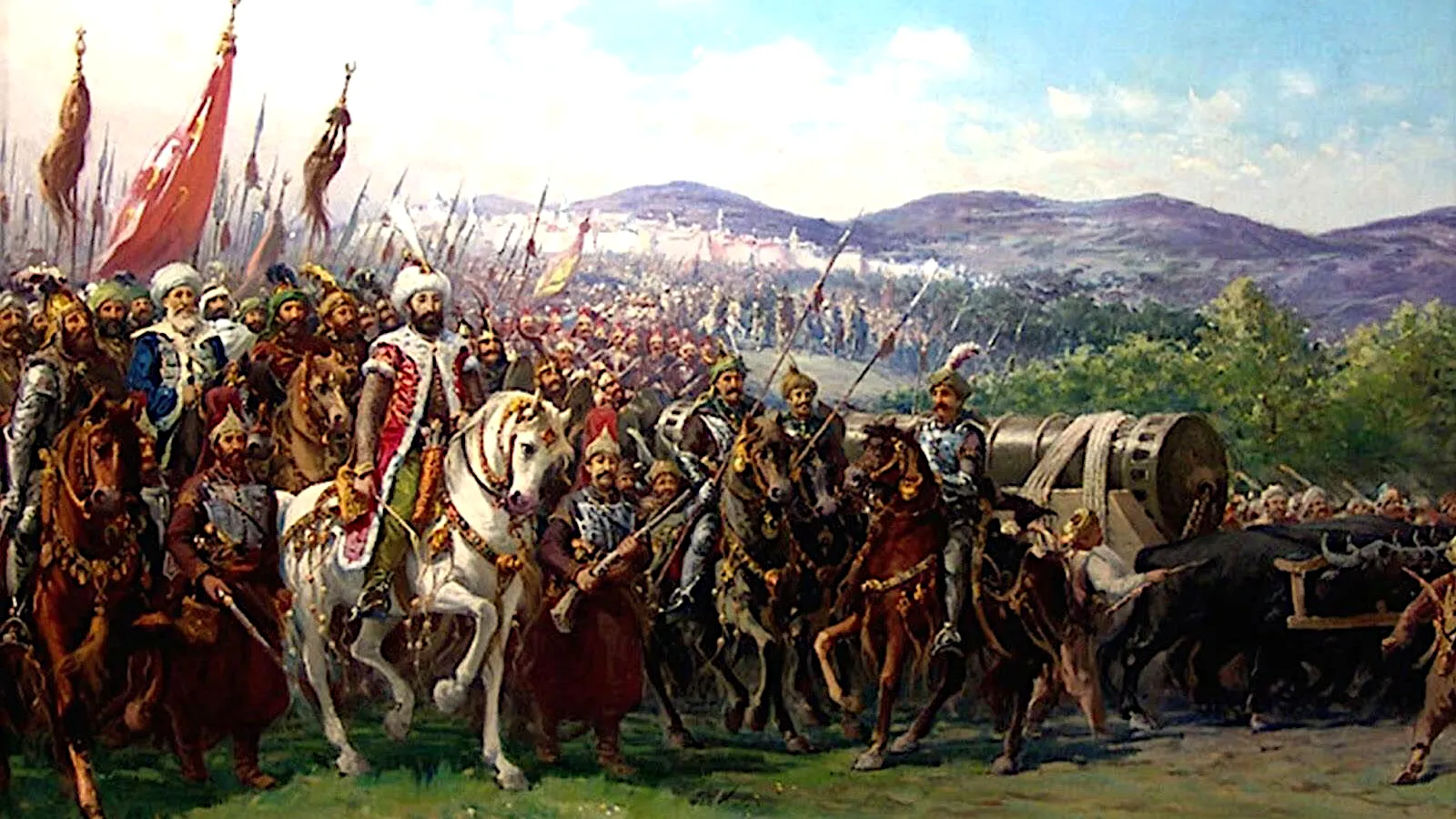
Before dawn on 29 May 1453, the great bell of Hagia Sophia had not yet stopped tolling when the first Ottoman standards appeared on the inner wall near the Gate of St. Romanus. Within hours, a city that had stood as the capital of Roman power for eleven centuries, and had turned back Arab fleets, Bulgar armies, and Crusader knights alike, belonged to a twenty-one-year-old Ottoman sultan. The Byzantine Empire — the direct continuation of the Roman state founded by Constantine the Great in 330 — ceased to exist. What followed was not merely the capture of a city but the closing of an age: the last flicker of the classical Mediterranean world snuffed out by cannon fire, and the opening of a new imperial order that would shape the eastern Mediterranean for the next 470 years.
A City on Borrowed Time
By the mid-fifteenth century, Constantinople was an empire in miniature — a walled city ruling little more than itself. At its height under Justinian in the sixth century, the Byzantine Empire had commanded the entire eastern Mediterranean basin; by 1453, the state inherited by Constantine XI Palaiologos consisted of the capital, a scattering of Aegean islands, and the semi-independent Peloponnesian territory of the Morea. The Fourth Crusade’s sack of the city in 1204 had never been fully undone — Constantinople’s population, once numbering in the hundreds of thousands, had collapsed to somewhere between 40,000 and 50,000 residents by the time of the final siege, with entire districts inside the walls given over to farmland, orchards, and ruin. The imperial treasury was empty. The once-formidable Byzantine navy was reduced to a handful of vessels. Successive emperors had spent the previous century begging Western Europe for a crusade that never fully materialized, offering union between the Orthodox and Catholic churches as the price of military aid — a bargain that provoked riots among Constantinople’s own clergy and population, who by and large preferred Ottoman rule to submission to the Pope.
Yet the city retained an importance wildly disproportionate to its shrunken borders. Constantinople commanded the Bosphorus, the narrow strait linking the Black Sea to the Mediterranean, making it the hinge on which trade between Europe and Asia turned. Genoese and Venetian merchant colonies controlled much of that commerce from fortified quarters within and across the water from the city, paying customs duties that were one of the last reliable sources of Byzantine revenue. For the Ottoman Turks, who by 1453 already held territory encircling the city on both the European and Asian sides, Constantinople was also a strategic absurdity: a fortified Christian enclave sitting astride their own lines of communication between the Balkans and Anatolia. Ottoman sultans had eyed the city for a century. Bayezid I had blockaded it in the 1390s; Murad II had besieged it unsuccessfully in 1422. What had changed by 1453 was less the target than the besieger.
Mehmed II and the Road to Constantinople
Mehmed II ascended the Ottoman throne for the second and final time in February 1451, following the death of his father, Sultan Murad II. He was nineteen years old, and the neighboring Christian and Muslim states alike initially misjudged him as an inexperienced youth. That misjudgment proved catastrophic. Mehmed had already served briefly as sultan as a child during one of his father’s temporary abdications, and he emerged as ruler with a fixation — reportedly nurtured since boyhood — on succeeding where generations of his predecessors had failed. Contemporary and modern historians alike describe him as intensely well-read, fluent in several languages, and consumed by the ambition to be remembered as a conqueror in the mold of Alexander the Great.
Mehmed moved with calculated patience before he moved with force. He first renewed a peace treaty with Constantine XI to buy time, then set about isolating the city both diplomatically and physically. In the spring of 1452 he ordered the construction of a new fortress, Rumeli Hisari (“throat-cutter” or “strait-cutter” in Ottoman Turkish), on the European shore of the Bosphorus at its narrowest point, directly across from the older Anadolu Hisarı fortress his great-grandfather had built on the Asian side. Built in roughly four months by a workforce of thousands, the twin fortresses gave the Ottomans complete command of the strait, able to sink or tax any ship — including Venetian grain convoys bound for Constantinople — that tried to pass without permission. When a Venetian vessel attempted to run the blockade later that year, Ottoman guns sank it and the sultan had the surviving crew executed, a signal to Constantinople’s Italian allies of what was coming. By early 1453, Mehmed had begun mustering an army and a fleet on a scale the region had not seen in generations, while inside the city, Constantine XI worked desperately, and largely in vain, to secure meaningful reinforcement from the Italian maritime republics and the Pope.
The Opposing Commanders
The defense of Constantinople rested on a small circle of men. Constantine XI Palaiologos, born in 1405, was the last in an unbroken line of Roman emperors stretching back, by the traditional reckoning, almost fifteen centuries. He had ruled first as Despot of the Morea before being proclaimed emperor in 1449; because of the political sensitivity of church union with Rome, he was never formally crowned by the Patriarch in Constantinople itself. Contemporaries and later historians alike describe him as a capable soldier and an unglamorous, dutiful administrator rather than a charismatic figure — a ruler who spent his brief reign trying to shore up alliances and city defenses with resources that were never remotely sufficient for the task in front of him.
His most capable subordinate was Giovanni Giustiniani Longo, a Genoese condottiere and member of one of Genoa’s great noble families, who arrived in Constantinople on 29 January 1453 with roughly 700 professional soldiers — some 400 recruited in Genoa itself and 300 more from the Genoese colony on the island of Chios. Giustiniani financed and organized the expedition largely on his own initiative, and Constantine XI, recognizing his experience in siege warfare, placed him in overall command of the land defenses. Giustiniani’s professional troops would prove to be the single most effective fighting force the defenders possessed.
On the Ottoman side stood Mehmed II himself, directing the siege in person, alongside experienced viziers and generals including Zaganos Pasha and Halil Pasha, the latter reportedly among a faction at court skeptical that the siege could succeed. The Ottoman army also fielded the elite Janissary corps — slave-soldiers trained from childhood and among the most disciplined infantry in the world at the time — alongside irregular troops, Anatolian and Rumelian regulars, and a large corps of engineers and artillerymen. Central to Mehmed’s plan was a Hungarian (or Transylvanian) cannon-founder named Orban, who had first offered his services, and his design for a siege gun capable of shattering the walls of Constantinople, to Constantine XI. The Byzantine emperor, unable to afford Orban’s fee or supply the raw materials he needed, turned him away. Orban went to Mehmed instead, who gave him the gold, bronze, and labor he required. Working at Adrianople, Orban cast what came to be known as the Great Bombard — reportedly some twenty-seven feet long, capable of hurling stone shot weighing over half a ton, and requiring a team of some sixty oxen and hundreds of men to haul it to the siege lines.
The Theodosian Walls: A Thousand Years of Defense
If Constantinople had survived so many previous sieges, it was chiefly because of its land fortifications — the Theodosian Walls, begun under the praetorian prefect Anthemius during the reign of Emperor Theodosius II and largely completed by 413 AD. Stretching roughly 6.5 kilometers from the shore of the Golden Horn to the Sea of Marmara, the walls formed not a single barrier but a defense in depth: an outer moat, a low outer wall, a wide terrace, and finally a massive inner wall roughly twelve meters high and nearly five meters thick, studded with more than ninety towers positioned to provide overlapping fields of fire. For a thousand years, this system had proven essentially impregnable to the siege technology available to Constantinople’s enemies — Avars, Arabs, Bulgars, and Rus armies had all broken against it. Even the disastrous fall of the city in 1204 had come by naval assault against the weaker sea walls along the Golden Horn, not by breaching the great land walls at all.
What made 1453 different was not a flaw in the walls’ design but a revolution in the technology arrayed against them: gunpowder artillery capable, for the first time, of battering masonry fortifications into rubble within weeks rather than being held at bay indefinitely. The Theodosian Walls had been built to resist battering rams, siege towers, and mining — not sustained bombardment by cannon throwing half-ton stone balls. Constantinople in 1453 was, in a real sense, the first great fortress city in history to fall primarily to gunpowder siege artillery, a fact not lost on European military engineers who studied the siege closely in its aftermath.
Preparations for the Siege
Through the winter of 1452–1453, both sides raced to prepare. Constantine XI ordered the walls repaired and provisioned the city as best his limited resources allowed, while pleading for aid from Venice, Genoa, and Rome. The response was modest: a handful of Venetian and Genoese ships and volunteers, including Giustiniani’s contingent, trickled in, but the great Western relief force the emperor hoped for never came. Including Giustiniani’s men and other foreign volunteers, modern historians estimate the total defending garrison at somewhere around 7,000 to 8,000 men — a figure that includes native Byzantine soldiers, armed civilians, sailors, and monks pressed into service alongside the professional Genoese and Venetian contingents. The Byzantine chronicler George Sphrantzes, who conducted a formal muster at the emperor’s order, recorded a far more precise and sobering count: 4,973 Greek soldiers along with about 200 foreign troops under arms, a total so small that Constantine reportedly asked Sphrantzes to keep the exact figure secret from the population.
To seal off the harbor of the Golden Horn — the narrow inlet north of the city that offered its most vulnerable stretch of walls — the Byzantines and their Italian allies stretched a massive iron chain across its mouth, floated on wooden pontoons and anchored at each end, physically barring Ottoman warships from entering. Meanwhile, Orban’s Great Bombard and a train of smaller Ottoman cannon were dragged overland from Adrianople to the siege lines outside the Theodosian Walls, a journey that reportedly took weeks given the gun’s enormous weight. By early April, Mehmed’s army — modern historians generally estimate its fighting strength at somewhere between 60,000 and 80,000 men, though contemporary chroniclers such as Sphrantzes inflated the figure to as many as 200,000 — had encircled the city’s landward defenses, while an Ottoman fleet variously estimated by Venetian eyewitnesses at around 145 vessels, including a dozen or more full war galleys, patrolled the waters of the Marmara and the mouth of the Bosphorus.
The Bombardment Begins
The siege proper opened on 6 April 1453, when Ottoman guns began a sustained bombardment of the Theodosian Walls. Orban’s Great Bombard, though a formidable psychological weapon capable of shaking the ground for miles and instilling terror in the defenders, proved slow and unreliable in practice — it could be fired only a handful of times a day, required lengthy cooling periods to avoid cracking, and, according to several accounts, eventually failed altogether, possibly killing its own crew in the process. Smaller and more numerous Ottoman guns did the more consistent damage, pounding sections of the wall near the Lycus river valley — the lowest and most vulnerable stretch of the fortifications, roughly in the middle of the landward defenses — into rubble by day, while defenders worked through the night to shore up the breaches with wooden stockades, earth, and whatever rubble could be gathered.
Constantine XI and Giustiniani organized the defense with the resources available, concentrating the ablest troops, including Giustiniani’s Genoese, at the weakest points along the wall. Early Ottoman probing assaults against the repaired breaches were beaten back at heavy cost to the attackers, and Mehmed’s engineers turned increasingly to mining operations, attempting to tunnel beneath the walls to plant explosive charges — a technique the defenders countered with their own counter-mining crews, who listened for the sound of digging and broke into Ottoman tunnels to destroy them with fire and hand-to-hand combat. Through most of April, the siege settled into this brutal rhythm of bombardment, assault, and repair, with neither side able to force a decisive breakthrough.
The Fleet Crosses the Hills
The Golden Horn chain frustrated Mehmed’s efforts to bring his fleet to bear against the city’s weaker northern walls, and an early attempt by the Ottoman navy to force the boom by direct assault failed. Mehmed’s response was one of the most audacious engineering feats of the age. On the night of 22 April 1453, Ottoman crews, working under cover of darkness, hauled a fleet reportedly numbering around seventy ships overland on a purpose-built causeway of greased logs, over the high ground behind the Genoese colony of Galata, and down into the waters of the Golden Horn beyond the chain’s reach. The defenders awoke the next morning to find an Ottoman fleet riding at anchor inside the supposedly sealed harbor — a psychological and strategic blow that forced Constantine XI to divide his already thin garrison to cover the newly threatened northern walls as well.
A Christian attempt on the night of 28 April to destroy the Ottoman ships now inside the Horn with fire ships ended in failure and heavy losses when the plan was discovered in advance, reportedly betrayed to the Ottomans by Genoese merchants from Galata anxious to avoid Mehmed’s reprisal. The failure further eroded the defenders’ already dwindling manpower and their capacity to hold the extended perimeter the city now had to defend on two fronts at once.
Weeks of Attrition
Through early and mid-May, the siege ground on. Mehmed’s guns continued to batter the Lycus valley sector of the walls, mining and counter-mining continued beneath them, and Ottoman assaults probed for weaknesses while the defenders, exhausted and vastly outnumbered, held their positions with dwindling supplies of food and gunpowder. Constantine XI is recorded as having received and rejected at least one Ottoman offer of terms — reportedly including safe passage for himself and the city’s inhabitants in exchange for surrender — choosing instead to remain and share the city’s fate. Within the Ottoman camp, some senior advisors, including the veteran vizier Halil Pasha, are said to have urged Mehmed to abandon the siege given the mounting cost and lack of decisive progress, while younger commanders pressed for an all-out assault. Mehmed sided with those counseling one final, massive effort.
By the last week of May, the walls near the Lycus valley — the section the defenders called the Mesoteichion — had been battered into a series of breaches held together largely by hastily built wooden stockades and the sheer determination of Giustiniani’s men and the imperial guard fighting alongside them. Mehmed set 29 May as the date for a final, all-arms assault, and ordered three days of celebration and preparation across the Ottoman camp beforehand, promising his troops the traditional rights of plunder that Islamic military custom of the era granted to soldiers who took a city by storm rather than by surrender.
“Charge, my friends and children! Now is the time to show your valor!” — Mehmed II, addressing his troops before the final assault, as recorded by the chronicler Kritovoulos
The Final Assault of 29 May 1453
The final attack began in the early hours before dawn. Mehmed sent his forces forward in successive waves designed to exhaust the defenders before committing his best troops: first the irregular bashi-bazouks, poorly trained and equipped but numerous, followed by disciplined Anatolian regulars, and finally the elite Janissary corps. The defenders, fighting without rest along a wall already broken in multiple places, held through the first two waves at a terrible cost to the attackers massed in the narrow ground between the outer and inner walls.
The battle turned on a combination of misfortune and sheer weight of numbers. Giustiniani, the linchpin of the defense at the Lycus valley breaches, was severely wounded — struck in the chest, by most accounts by a crossbow bolt or handgun shot — during the fighting against the Janissary assault. Carried from the wall for treatment, his departure caused confusion and a collapse in morale among the Genoese troops who had anchored the defense at its most critical point; his men began withdrawing from the wall, and the line started to give way. At roughly the same time, according to the chronicler Doukas, a small and lightly defended postern gate known as the Kerkoporta, north of the main breaches, was found open — whether through oversight or in the chaos of the retreat — allowing a party of Ottoman troops to slip inside the walls and raise their banners on the ramparts. Modern historians debate how decisive the Kerkoporta episode truly was, since the main Ottoman breakthrough appears to have come at the Lycus valley breaches themselves once the Genoese defense collapsed there. Whatever the precise sequence, panic spread rapidly along the wall as defenders saw Ottoman standards flying behind their own lines, and organized resistance disintegrated within a short span of time.
The Death of Constantine XI and the Sack of the City
What happened to Constantine XI in the final hours of the battle is genuinely uncertain, and no reliable eyewitness account of his death survives. The most consistent later tradition holds that, on realizing the walls were lost, the emperor tore off his imperial insignia so as not to be recognized and taken alive, and threw himself into the fighting alongside his remaining soldiers near the breach, disappearing in the chaos of the final struggle. His body was never conclusively identified afterward, and later legends — including popular stories that he was miraculously turned to marble and would one day return to reclaim the city — filled the vacuum left by the absence of hard fact. Some later chroniclers and historians recorded versions of a defiant final address the emperor supposedly gave his commanders on the eve of the assault, but the surviving accounts of this speech postdate the events by decades and differ substantially from one another, leading most modern historians to treat the specific words attributed to Constantine XI as later literary embellishment rather than a reliable record of what he actually said.
With the walls breached and the defense collapsing, Ottoman troops poured into the city. Mehmed had granted his soldiers the customary three days of plunder promised to an army that took a city by storm, and the sack that followed was brutal: soldiers looted homes, churches, and monasteries, and thousands of the city’s remaining inhabitants — estimates vary considerably across sources, but many accounts put the number in the tens of thousands — were seized and marched off into slavery. The Venetian eyewitness Nicolò Barbaro, who survived the sack and escaped by ship, left one of the most vivid firsthand accounts of the day’s violence in his diary.
“The blood flowed in the city like rainwater.” — Nicolò Barbaro, Diary of the Siege of Constantinople
Several sources indicate that Mehmed, dismayed by the scale of destruction he found once he entered the city, curtailed the sanctioned pillage after roughly a day rather than allowing it to run the full three days initially promised — though the damage by that point was already extensive, and disputes among the surviving sources about the exact duration make it difficult to state a precise figure with certainty.
Aftermath: Mehmed’s Entry and a New Capital
Mehmed II entered Constantinople in a formal triumphal procession on the afternoon of 29 May 1453, riding directly to the Hagia Sophia, the great sixth-century cathedral that had stood as the spiritual heart of Byzantine Christianity for over 900 years. According to Kritovoulos, the Greek historian who later entered Mehmed’s service and chronicled his reign, the sultan was visibly moved by what he found amid the ruin and violence of the sack.
“What a city we have given over to plunder and destruction!” — Mehmed II, on entering the ruined city, as recorded by Kritovoulos
Mehmed ordered Hagia Sophia converted into a mosque almost immediately, and the first Friday prayers were held there within days of the conquest. He took the title “Fatih,” the Conqueror, and set about rebuilding and repopulating a city that had been reduced by decades of decline and now further devastated by the sack. Within years, Constantinople — increasingly known colloquially by the Turkish rendering of the Greek phrase for “to the city,” which would eventually become the modern name Istanbul — was reestablished as the political, religious, and commercial capital of the Ottoman Empire, a role it would hold for more than four and a half centuries.
Quick Facts
- Conflict: Siege and Fall of Constantinople
- Dates: 6 April – 29 May 1453 (53 days)
- Location: Constantinople (modern Istanbul, Turkey)
- Combatants: Byzantine Empire and allied Genoese and Venetian forces vs. the Ottoman Empire
- Byzantine/allied commander: Emperor Constantine XI Palaiologos, with Giovanni Giustiniani Longo commanding the land defense
- Ottoman commander: Sultan Mehmed II
- Defender strength: Roughly 7,000–8,000 troops, including foreign allies (Sphrantzes recorded a precise muster of 4,973 Greek troops plus about 200 foreigners)
- Ottoman strength: Modern historians estimate roughly 60,000–80,000 fighting men, supported by a fleet of around 145 vessels (contemporary chroniclers claimed far higher figures)
- Key weapon: The Great Bombard, a massive siege cannon cast by the engineer Orban
- Outcome: Ottoman victory; the city falls, Constantine XI is killed, and the Byzantine Empire ends
- Significance: The end of the Roman Empire’s last continuous remnant and the establishment of Constantinople as the Ottoman capital
Timeline of Key Events
- 1449 — Constantine XI Palaiologos is proclaimed Byzantine emperor.
- February 1451 — Mehmed II becomes Ottoman sultan for the second and final time.
- March–August 1452 — The Ottomans build Rumeli Hisari on the Bosphorus, cutting Constantinople off from the Black Sea.
- 29 January 1453 — Giovanni Giustiniani Longo arrives in Constantinople with roughly 700 Genoese troops.
- 6 April 1453 — The Ottoman siege begins; bombardment of the Theodosian Walls opens.
- 22 April 1453 — Ottoman ships are hauled overland into the Golden Horn, bypassing the defensive chain.
- 28 April 1453 — A Christian attempt to burn the Ottoman fleet inside the Golden Horn fails.
- 29 May 1453 — The final Ottoman assault breaches the walls; Constantine XI is killed and the city falls.
- 29 May 1453 (afternoon) — Mehmed II enters the city and proceeds to Hagia Sophia.
- 1 June 1453 — The first Muslim Friday prayers are held in Hagia Sophia, newly converted into a mosque.
Legacy: The End of Rome and the Dawn of a New Age
The fall of Constantinople carried a symbolic weight far beyond the military significance of one city changing hands. It extinguished the last direct institutional continuation of the Roman Empire, a state that — by the traditional count running back to Augustus, or more conservatively to Constantine the Great’s founding of the city in 330 — had endured in some form for well over a thousand years. Contemporaries across Christian Europe understood the event in exactly these terms: as the definitive end of Rome, and many historians have long used 1453 as a conventional marker for the close of the medieval period in the eastern Mediterranean, even as its precise significance as a turning point remains debated among scholars.
The conquest reshaped the political map of the eastern Mediterranean and the Balkans for centuries. Constantinople’s transformation into the Ottoman capital gave the empire a commercial and strategic hub at the crossroads of Europe and Asia, accelerating Ottoman expansion into the Balkans, the Aegean, and eventually the Middle East and North Africa. Venetian and Genoese trading privileges in the Black Sea and eastern Mediterranean, already under pressure before 1453, eroded further under Ottoman control of the straits, a factor historians frequently cite — alongside the broader pattern of Ottoman expansion across the region in the following decades — as one of several pressures pushing Portuguese and Spanish explorers to search for alternative sea routes to Asia, contributing to the broader current of European maritime expansion in the following decades, though historians caution against treating the fall of Constantinople as a single, direct cause of the Age of Exploration rather than one factor among several.
The fall also drove a wave of Greek scholars, clergy, and manuscripts westward into Italy, many of whom had already been migrating in the decades before 1453 as Byzantine fortunes declined, but whose numbers swelled sharply after the conquest. These émigrés brought with them classical Greek texts and expertise in the Greek language that fed directly into the intellectual currents of the Italian Renaissance, reinforcing the revival of classical learning already underway in humanist circles in Florence, Venice, and Rome. Constantinople itself endured and thrived under its new rulers, rebuilt as Istanbul into one of the great cities of the early modern world — a reminder that the fall of 1453 was, for the conquerors, not an ending at all but a beginning.
Frequently Asked Questions
Why did the Theodosian Walls, which had protected Constantinople for a thousand years, finally fail in 1453?
The walls themselves were not fundamentally weaker in 1453 than they had been for centuries. What changed was the besieging technology: Mehmed II deployed gunpowder artillery, including massive bombards cast specifically for the siege, capable of battering masonry fortifications that had successfully resisted battering rams, siege towers, and mining for a thousand years. Constantinople is often cited as one of the first major fortress cities to fall primarily to sustained cannon bombardment.
How many soldiers actually defended Constantinople?
The precise figure is debated. The Byzantine official George Sphrantzes recorded a formal muster of 4,973 Greek troops and about 200 foreign soldiers under arms — a total of roughly 5,000 professional and semi-professional fighters. Modern historians, accounting for armed civilians, monks, and sailors pressed into the defense, generally estimate the full defending force at around 7,000 to 8,000, still vastly outnumbered by the besieging Ottoman army.
What actually happened to Emperor Constantine XI?
No reliable eyewitness account of his death survives, and his fate remains genuinely disputed among historians. The most widely repeated tradition holds that he removed his imperial regalia and died fighting among his soldiers near the breached walls rather than be captured, but his body was never conclusively identified, and popular legend later filled the gap with stories of miraculous survival that have no basis in verifiable historical evidence.
Did Mehmed II really transport his warships overland?
Yes. On the night of 22 April 1453, Ottoman crews hauled a fleet of roughly seventy vessels over the hills behind the Genoese colony of Galata on a causeway of greased logs, launching them into the Golden Horn beyond the reach of the great chain that blocked the harbor’s entrance. It remains one of the most celebrated engineering feats of the entire siege.
What happened to Hagia Sophia after the conquest?
Mehmed II ordered the cathedral converted into a mosque almost immediately after entering the city, and the first Muslim Friday prayers were held there within days, on 1 June 1453. The building — constructed under Emperor Justinian in the sixth century — remained a mosque throughout the Ottoman era before later becoming a museum and, in more recent years, reverting again to use as a mosque.
Is 1453 really considered the “end of the Middle Ages”?
It is a conventional marker used by many historians, particularly for the eastern Mediterranean and Byzantine world, because it ended the last continuous institutional link to the Roman Empire. Its significance as a turning point for European history more broadly is debated, since factors such as the invention of the printing press, the beginnings of the Age of Exploration, and the Protestant Reformation are also commonly cited as markers of the transition from medieval to early modern Europe.
Recommended Reading
- Roger Crowley, 1453: The Holy War for Constantinople and the Clash of Islam and the West (2005)
- Steven Runciman, The Fall of Constantinople 1453 (1965)
- Marios Philippides and Walter K. Hanak, The Siege and Fall of Constantinople in 1453: Historiography, Topography, and Military Studies (2011)
- John Julius Norwich, Byzantium: The Decline and Fall (1995)
Read Next
August 14, 2026
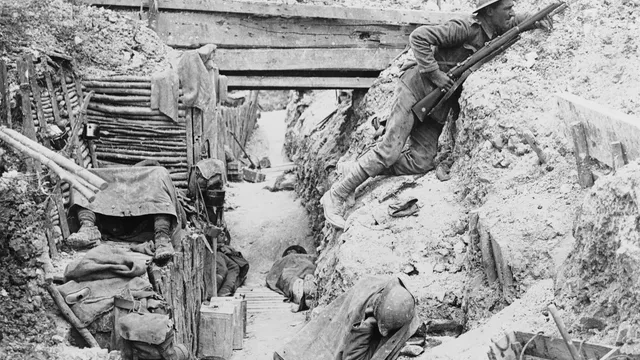
The Battle of the Somme: World War I's Costliest Battle
The Battle of the Somme (1916) cost over a million Allied and German casualties across five brutal months, including the deadliest day in British Army history.
August 8, 2026
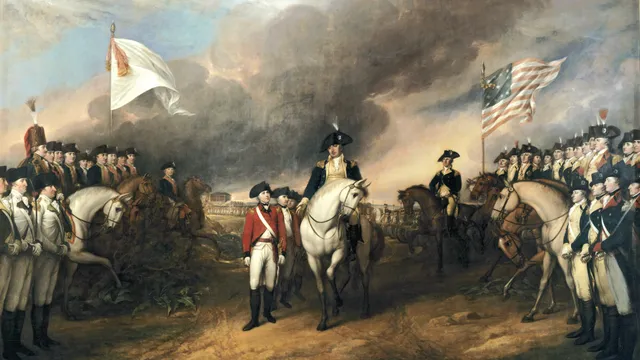
The Siege of Yorktown: The Battle That Won American Independence
How Washington, Rochambeau, and a French fleet trapped Cornwallis at Yorktown in 1781, effectively ending the American Revolutionary War.
August 8, 2026
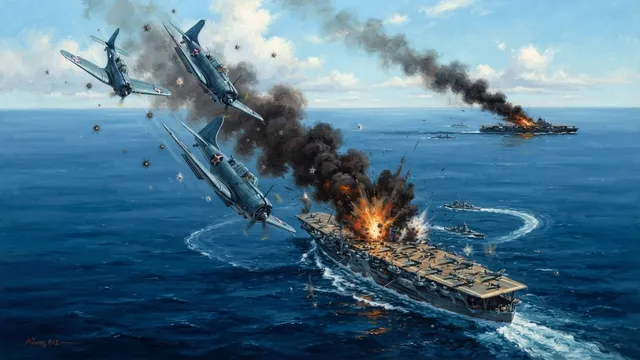
The Battle of Midway: The Turning Point of the Pacific War
How American codebreakers and a handful of dive bombers sank four Japanese carriers at Midway and turned the Pacific War.