Military History
The Battle of Zama: Scipio's Defeat of Hannibal
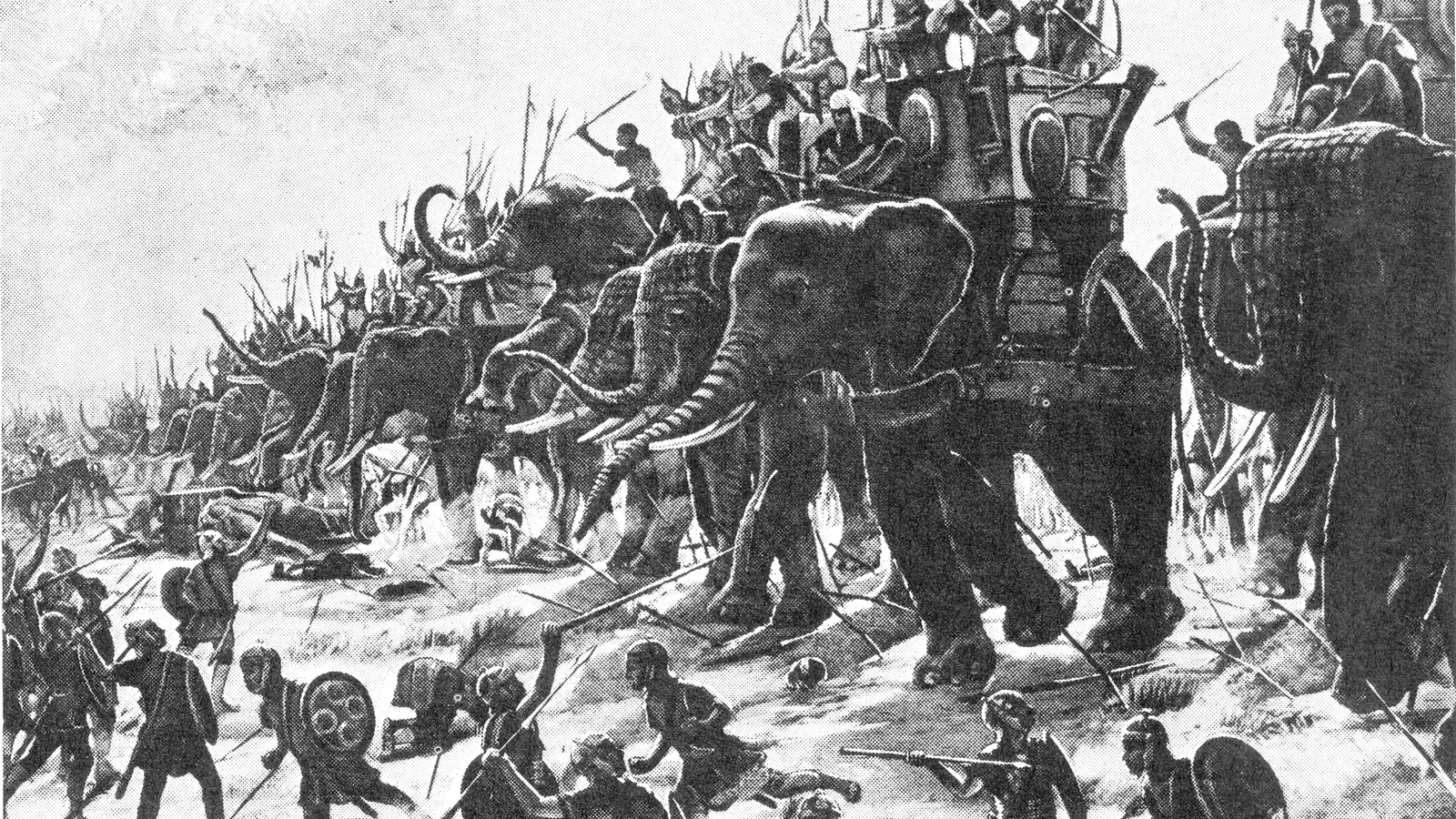
In the autumn of 202 BC, on a stretch of North African plain southwest of Carthage, two of antiquity’s greatest generals faced each other in battle for the first and only time. One was Hannibal Barca, the Carthaginian commander whose victories at the Trebia, Lake Trasimene, and above all Cannae had made him the most feared soldier in the ancient world. The other was Publius Cornelius Scipio, a Roman general not yet forty years old who had spent a decade studying Hannibal’s methods, first as a survivor of the Cannae disaster and later as the architect of Rome’s own conquest of Carthaginian Spain. At Zama, Scipio would turn Hannibal’s own tactics back against him and end, in a single afternoon, the war that had convulsed the Mediterranean for sixteen years.
The Battle of Zama does not carry the tactical glamour of Cannae, and it has never entered military textbooks as a model of battlefield artistry in the way Hannibal’s double envelopment has. What it offers instead is something rarer in the history of the Second Punic War: a genuine reversal, the spectacle of the war’s greatest victim turning his tormentor’s own methods against him and winning. It was also, in the judgment of most historians of the ancient Mediterranean, the battle that decided who would dominate the Western world for the next several centuries.
Zama also stands apart from most ancient battles for a detail that survives nowhere else in the story of these two men: a face-to-face meeting between Hannibal and Scipio on the eve of the fighting, recorded by the historian Polybius, in which two of history’s greatest commanders spoke to one another directly, in their own words, before turning their armies loose against each other.
The Long Road from Cannae
To understand Zama, it helps to remember what came before it. Hannibal’s crushing victory at Cannae in 216 BC had destroyed a Roman army of tens of thousands of men and killed a sitting consul along with a large fraction of Rome’s senatorial class. By any conventional measure of ancient warfare, Rome should have sued for peace. Instead, the Senate refused to negotiate, raised new legions, and settled into a grinding war of attrition that would stretch on for another fourteen years.
Hannibal remained in Italy after Cannae, undefeated in the field but increasingly unable to translate his tactical brilliance into strategic victory. Rome’s alliance system across the Italian peninsula largely held together, denying him the fresh troops and supply base he needed to press his advantage or besiege Rome itself. Roman commanders, chastened by Cannae, adopted a more cautious approach associated with the dictator Fabius Maximus, avoiding pitched battle with Hannibal while gradually strangling his position through attrition, harassment, and the slow erosion of his Italian alliances. Years passed in this stalemate. Hannibal won smaller engagements and held much of southern Italy, but the decisive battle he needed never came, and reinforcements from Carthage and Spain arrived too late or in too small a number to change the balance—most disastrously when his brother Hasdrubal Barca, marching a second Carthaginian army over the Alps to reinforce him, was intercepted and killed at the Battle of the Metaurus in 207 BC, his head reportedly thrown into Hannibal’s camp as grim proof that no relief was coming.
While Hannibal’s position in Italy slowly calcified into stalemate, the war’s real momentum shifted to other theaters. Rome fought Carthage for control of Sicily and Spain, the latter becoming the training ground for the general who would eventually defeat Hannibal. It was in Spain that a young Roman noble, Publius Cornelius Scipio, first made his name, and it was Rome’s growing dominance there and its willingness to finally carry the war to Africa itself that would force Hannibal’s recall from Italy after nearly sixteen years on Roman soil.
- 264–241 BC: First Punic War; Rome defeats Carthage and annexes Sicily.
- 218 BC: Hannibal crosses the Alps into Italy, opening the Second Punic War.
- 216 BC: Hannibal annihilates a Roman army at Cannae.
- 210 BC: Scipio, still in his mid-twenties, takes command of Roman forces in Spain.
- 209 BC: Scipio captures New Carthage, the Carthaginian stronghold in Spain.
- 207 BC: Hannibal’s brother Hasdrubal is defeated and killed at the Metaurus, ending hope of reinforcement.
- 206 BC: Scipio’s victory at Ilipa effectively expels Carthage from Spain.
- 204 BC: Scipio lands in North Africa with a Roman invasion force.
- 203 BC: Scipio defeats a Carthaginian-Numidian army at the Great Plains; Carthage recalls Hannibal from Italy.
- 202 BC: The Battle of Zama ends the Second Punic War in Rome’s favor.
Scipio’s Rise and the Road to Africa
Scipio’s path to Zama began in tragedy. His father and uncle, both named in the wider Cornelii Scipiones family that had commanded Roman forces in Spain, were killed there in 211 BC in a pair of Carthaginian victories that nearly ended Rome’s presence on the peninsula entirely. In the aftermath, the Roman Senate, short of experienced commanders willing to take on a badly damaged command, turned to the twenty-something Scipio—too young by the normal standards of Roman office-holding, but already a battle-tested veteran who had reportedly survived the rout at Cannae as a young military tribune. He was given proconsular command in Spain in 210 BC, an unusual grant of authority for someone who had never held the senior magistracies Roman military commands typically required.
Scipio proved an unusually innovative commander. In 209 BC he executed a daring surprise assault on New Carthage, the main Carthaginian base in Spain, exploiting local knowledge of a lagoon that could be waded at low tide to bypass the city’s defenses—a stroke that captured the Carthaginian treasury, arsenal, and a large body of hostages in a single stroke. He followed this with a string of victories that broke Carthaginian power in Spain for good, most decisively at the Battle of Ilipa in 206 BC, where he used flexible, decentralized infantry tactics and a reversed deployment—weak troops in the center, strong troops on the flanks—to encircle and rout a numerically superior Carthaginian army. It was, in a sense, a rehearsal for the kind of tactical flexibility he would later need against Hannibal himself, and historians have long noted the irony that Scipio’s education as a general came substantially from studying and countering Carthaginian methods on Carthaginian-held ground.
By 206 BC Spain was effectively cleared of Carthaginian forces, and Scipio returned to Rome to stand for the consulship, which he won for 205 BC despite fierce opposition from more conservative senators, including the elder statesman Fabius Maximus, who distrusted Scipio’s ambition and doubted the wisdom of carrying the war to Africa while Hannibal still stood on Italian soil. Scipio was eventually permitted to raise a volunteer force and cross to Africa, landing near Utica in 204 BC. There he built an alliance with the Numidian prince Masinissa, whom he had first come to know during the Spanish campaigns, and combined Roman legions with Numidian cavalry to defeat a large Carthaginian-Numidian army at the Battle of the Great Plains in 203 BC. With Roman forces now threatening the Carthaginian heartland directly, the government in Carthage made the decision that had seemed unthinkable for over a decade: it recalled Hannibal from Italy to defend the homeland.
Hannibal’s departure from Italy in late 203 BC closed one of the most remarkable campaigns in military history without a final decisive battle. He had spent the better part of sixteen years on Roman soil, undefeated by any Roman army sent directly against him, yet unable to break Rome’s will or its alliance system. He returned to Africa to find a war that had, in his absence, been transformed by an enemy general who had learned from watching him.
The Opposing Forces and Commanders
The armies that met at Zama were, in most respects, more evenly matched than the two forces that had clashed at Cannae sixteen years earlier—though ancient sources disagree, as they often do, on the precise numbers involved. Polybius records Hannibal’s army as including more than eighty war elephants, roughly 12,000 mercenary troops, additional levies of Libyan and Carthaginian infantry, and the veteran soldiers Hannibal had brought back from Italy, along with cavalry positioned on both wings. Modern historians, working from Polybius and other surviving accounts, generally estimate the total Carthaginian force at somewhere between roughly 36,000 and 50,000 infantry plus around 4,000 cavalry, though these figures vary considerably between ancient writers—Appian’s later account gives numbers on the higher end that most modern scholars treat with caution. Scipio’s combined Roman and Numidian force is usually estimated at somewhere near 29,000 to 40,000 men in total, including a Roman infantry core organized in the traditional hastati-principes-triarii formation, an Italian cavalry contingent under his trusted lieutenant Gaius Laelius, and a large body of Numidian infantry and cavalry supplied by Masinissa.
Hannibal Barca, by this point in his mid-forties, remained the most experienced and feared commander of his generation, but he faced Zama in an unusually weakened tactical position. His army was a patchwork rather than the finely tuned, battle-hardened force he had commanded through most of the Italian campaign: veteran troops recently shipped back from Italy, newer Carthaginian and Libyan levies with little combat experience together, Ligurian and Gallic mercenaries, and a large body of war elephants only recently assembled and, by most accounts, insufficiently trained for the disciplined tactical role Hannibal needed from them. Worse, for the first time in his career, Hannibal found himself facing a Roman commander with a genuine cavalry advantage.
Scipio, not yet forty, had built his reputation on adapting Carthaginian tactical ideas—flexible maniple deployment, coordinated infantry and cavalry action, and a willingness to depart from conventional Roman formations—to Roman use. He commanded an army largely composed of veterans, including survivors of Cannae who had spent years in a kind of disgraced exile in Sicily as punishment for the defeat, eager to redeem themselves under a general who trusted them. Scipio was assisted by Gaius Laelius, an able cavalry commander, and by a political and military relationship that would prove decisive to the entire campaign: his alliance with Masinissa, the Numidian king.
Masinissa’s presence on the Roman side is one of the more remarkable reversals of the entire Second Punic War. He had originally fought for Carthage in Spain, but after Roman successes there convinced him that Carthaginian power was in irreversible decline, he switched his allegiance to Rome, eventually securing Scipio’s help to unite the Numidian kingdoms under his own rule after a bitter succession struggle with the rival king Syphax, who remained loyal to Carthage. By the time of Zama, Masinissa commanded thousands of Numidian cavalry and infantry on Scipio’s side—precisely the kind of fast, skirmishing horsemen that had shredded Roman cavalry at Cannae and that Hannibal now, for the first time in the war, largely lacked. Ancient and modern historians alike regard Masinissa’s defection as one of the single most consequential strategic developments of the entire war, arguably rivaling any individual battlefield decision in its effect on the war’s outcome.
The Meeting Before the Battle
Before the armies engaged, Polybius records an event without real parallel elsewhere in ancient military history: a private conference between the two opposing commanders, held near the town of Naragara, with only an interpreter present. According to Polybius, Hannibal requested the meeting, and Scipio agreed to hear him out before committing to battle.
Polybius’s account has Hannibal opening the exchange with something close to a wistful reflection on the entire war between their two peoples, proposing that Carthage cede its former Mediterranean possessions—Sicily, Sardinia, and Spain—in exchange for peace:
“Would that neither the Romans had ever coveted any possessions outside Italy, nor the Carthaginians any outside Africa.” — Hannibal, according to Polybius, The Histories, Book XV
Scipio, unmoved, pointed out that Rome’s terms had already been substantially agreed with Carthage’s own envoys before Hannibal’s return from Italy reopened the war, and that Carthage itself had broken that earlier truce by attacking a Roman supply fleet. He refused to offer easier terms now that Rome held the stronger hand, closing the conference with an ultimatum that left Hannibal no room to negotiate further:
“Either put yourselves and your country at our mercy or fight and conquer us.” — Scipio, according to Polybius, The Histories, Book XV
The two men parted without agreement, and both armies spent the night preparing for battle the next morning. Historians generally regard the meeting itself as a credible historical event—it is reported in detail by Polybius, writing within a couple of generations of the battle and drawing on sources close to Scipio’s own family—though the precise wording of the exchange, translated and likely reconstructed for dramatic effect in the manner typical of ancient historical writing, should be read as Polybius’s rendering of the substance of the conversation rather than a verbatim transcript.
The Battlefield and Scipio’s Answer to the Elephants
The armies met on relatively open, flat ground suited to large-scale infantry and cavalry maneuver—terrain that, on the surface, appeared to favor Hannibal’s numbers and his elephant corps. The precise location has never been settled beyond doubt; ancient sources associate the battle with the town of Zama, though most modern historians place the actual fighting somewhat to the west, near a site called Naraggara, and some uncertainty about the exact battlefield persists in the scholarship to this day.
Scipio’s greatest tactical problem was Hannibal’s eighty-odd war elephants, an intimidating force capable of trampling infantry formations and shattering morale even where they inflicted relatively few direct casualties. Rather than meeting the elephants with a dense, unbroken line—the traditional Roman formation, and exactly the kind of target elephants were most effective against—Scipio arranged his maniples in files with wide lanes running directly through the Roman formation from front to back, screened by his light infantry, the velites. The plan was to let the elephants charge into these corridors, where the velites could harass them with javelins from both sides as they passed through, and let the animals run largely harmlessly out the back of the Roman formation rather than smashing into a solid wall of infantry. It was an elegant solution to a problem no Roman commander had solved cleanly before, and it reflected the same flexible, adaptive approach to formation that had served Scipio so well in Spain.
The Elephant Charge
The battle opened with Hannibal ordering his elephants forward against the Roman center, likely hoping to break the Roman line before it could close with his infantry. The results were mixed and, in several respects, worked against Hannibal from the outset. Some elephants, panicked by Roman trumpets and horns sounded deliberately to unsettle them, or wounded by javelins from the velites, veered sideways instead of charging straight ahead. A portion of the frightened animals turned back into Hannibal’s own Numidian cavalry on his left wing, throwing that formation into disorder before the two sides’ horsemen had even engaged. Other elephants charged down the lanes Scipio had opened in the Roman line, doing comparatively little damage as the velites harried them from the flanks and let them pass through to the rear, where they were driven off the field entirely.
The elephant charge, meant to be Hannibal’s opening blow against Roman cohesion, instead disrupted his own cavalry wing and failed to break the Roman infantry it was aimed at. It was the first sign, in a battle that would produce several, that Scipio had anticipated and prepared for the specific tools in Hannibal’s arsenal in a way none of Hannibal’s previous Roman opponents had managed.
The Cavalry Clash on the Wings
With the elephants driven off or scattered, the cavalry engaged on both flanks almost simultaneously. On the Roman left, Gaius Laelius’s Italian cavalry, already advantaged by the disorder Hannibal’s own retreating elephants had caused among the opposing Numidian horse, drove the Carthaginian cavalry from the field. On the Roman right, Masinissa’s Numidian cavalry did much the same against the cavalry opposing him. In both cases, the Carthaginian and allied horsemen were routed and pursued well away from the main battlefield—a development that, crucially, removed virtually all of Hannibal’s cavalry from the fight at precisely the moment it would be needed to protect his infantry’s flanks and rear.
This was, in the judgment of most historians who have studied the battle closely, the single most consequential development of the day, though its full effect would not be felt until later in the fighting. Hannibal, for the first time in the war, found himself outmatched in the cavalry arm that had won him nearly every previous battle against Rome.
The Infantry Clash
With the cavalry cleared from both wings, the infantry engagement that followed unfolded in stages that mirrored, and inverted, the tactical drama of Cannae itself. Hannibal had arranged his infantry in three successive lines: his less experienced Ligurian, Gallic, and other mercenary troops in front, Carthaginian and Libyan levies in a second line behind them, and his veteran troops recently returned from Italy held back in a third line as a final reserve, kept deliberately apart from the forward lines rather than integrated with them.
The first clash, between Scipio’s leading Roman maniples and Hannibal’s front line of mercenaries, was hard-fought, and by most accounts the Carthaginian front line inflicted real damage before being pushed back. What followed, however, exposed a fatal weakness in Hannibal’s improvised army: rather than being absorbed and reinforced by the second line behind them, as a well-drilled and cohesive force might have managed, the retreating front-line troops were in places refused passage by the second line and, in the chaotic fighting that resulted, some of Hannibal’s own troops turned on each other. Roman forces pressed the advantage, breaking the first two Carthaginian lines in turn before finally reaching Hannibal’s veteran third line—the seasoned troops he had brought back from Italy, positioned as his last and best hope of victory.
Here the battle reached something close to a standstill. Hannibal’s veterans, unlike the troops in front of them, held firm against the advancing Roman infantry, and for a time the outcome hung genuinely in the balance, with both sides fighting on ground now choked with the dead and wounded from the earlier fighting.
Masinissa’s Cavalry Turns the Battle
The deadlock broke only when the Roman and Numidian cavalry under Laelius and Masinissa, having pursued Hannibal’s routed cavalry well off the field earlier in the battle, regrouped and returned—striking Hannibal’s veteran infantry from behind at the precise moment its front was fully engaged with Scipio’s advancing Roman line. Caught between Roman infantry to their front and Roman-allied cavalry to their rear, Hannibal’s last reserve, the most experienced troops on the field, was surrounded and destroyed.
The parallel to Cannae is one that ancient and modern historians alike have found difficult to resist: at Cannae, it was Hannibal’s disciplined cavalry, returning from a successful pursuit to strike the Roman rear at the decisive moment, that had sealed Rome’s destruction. At Zama, it was Roman and Numidian cavalry, executing very much the same maneuver, that sealed Hannibal’s. Whether Scipio consciously modeled his tactics on Hannibal’s own greatest victory is a matter historians continue to debate, but the structural echo between the two battles has rarely gone unremarked.
Casualties and the End of the Fighting
As at Cannae, ancient sources give figures for the losses at Zama that modern historians treat with considerable caution rather than as precise counts. Polybius records Roman losses of just over 1,500 killed, against Carthaginian losses of roughly 20,000 killed and a comparable number taken prisoner—a lopsided outcome that, if accepted at face value, would make Zama one of the more one-sided major battles of the entire war. Other ancient writers give broadly similar orders of magnitude, though, as with most ancient casualty figures, modern historians caution that such numbers were prone to exaggeration, rounding, and the rhetorical conventions of ancient historical writing, and should be read as indicating the general scale and lopsidedness of the Roman victory rather than an exact tally.
Hannibal himself escaped the field with a small escort, first to the city of Hadrumetum and then back to Carthage itself, where, according to Polybius, he told the Carthaginian senate plainly that the war was lost and that Carthage must seek peace on whatever terms Rome would grant.
The Aftermath: Surrender and the Peace of 201 BC
Zama effectively ended Carthage’s capacity to continue the war. With its last field army destroyed and Hannibal himself counseling peace, the Carthaginian government sued for terms, and Rome, through Scipio, imposed a settlement far harsher than the one Carthage had provisionally accepted before Hannibal’s return from Italy had reopened hostilities. Carthage was stripped of its overseas territories, reduced to a fixed and much smaller war fleet, forbidden from waging war anywhere, even in self-defense, without Roman permission, required to hand over its remaining war elephants, and bound to pay a massive war indemnity to Rome spread out over fifty years. Masinissa, meanwhile, was confirmed and expanded in his rule over a united Numidian kingdom on Carthage’s own doorstep—a rewarded ally who would go on to harass and encroach on Carthaginian territory for decades, ultimately helping provoke the Third Punic War and Carthage’s final destruction in 146 BC.
For Rome, the peace of 201 BC marked the effective end of Carthage as a major military and naval power in the Mediterranean and cleared the way for Rome’s subsequent expansion into the Greek east over the following decades. Scipio returned to Rome to an extraordinary triumph and the honorific title Africanus, by which history has known him ever since.
Quick Facts
- Date: 202 BC (autumn)
- Location: Near Zama, in modern Tunisia; the precise site is debated, with many modern historians favoring a location near ancient Naraggara
- Commanders: Publius Cornelius Scipio (Rome, later “Africanus”) vs. Hannibal Barca (Carthage)
- Forces: Roman and allied army of roughly 29,000–40,000, including a large Numidian contingent under Masinissa, vs. a Carthaginian army of roughly 36,000–50,000 with more than 80 war elephants
- Casualties: Ancient sources (chiefly Polybius) record around 1,500 Roman dead against roughly 20,000 Carthaginian dead and a similar number captured; modern historians treat these figures as indicative rather than precise
- Outcome: Decisive Roman victory; Carthage sues for peace, ending the Second Punic War
Legacy: Rome’s Path to Mediterranean Dominance
Zama’s significance reaches well beyond the immediate outcome of the Second Punic War. With Carthage reduced to a client state stripped of its navy and its ability to wage independent war, Rome was freed to turn its military energy eastward, beginning a period of expansion into the Hellenistic kingdoms of Greece, Macedon, and Asia Minor that would, within a few generations, leave Rome the dominant power across the entire Mediterranean basin. The war that Hannibal had once seemed on the verge of winning outright ended instead as the foundation of the empire that would eventually destroy Carthage altogether in 146 BC.
Scipio’s own subsequent career illustrates how quickly Roman political life could turn on even its greatest military figures. He went on to help defeat the Seleucid king Antiochus III in the eastern Mediterranean in the 190s BC through his brother Lucius’s campaign, on which Scipio served as an advisor, but he increasingly found himself the target of political attacks from conservative senators, most notably Cato the Elder, who distrusted Scipio’s personal power, his Hellenized tastes, and the outsized authority his military reputation gave him within a republic wary of any single figure accumulating too much influence. Accused of financial improprieties relating to the eastern campaigns, Scipio responded with characteristic defiance—according to tradition, tearing up his own account books before the Senate rather than answering the charges in detail—and eventually withdrew from active politics to his country estate at Liternum, where he died around 183 BC, the same year, by a coincidence later Roman writers found irresistible, as Hannibal himself.
Hannibal’s own post-Zama life took a similarly turbulent path. He remained in Carthage for several years after the defeat, serving as a civilian magistrate and pushing through reforms to the city’s governing institutions aimed at curbing corruption and restoring Carthage’s finances. His reforms made him enemies among Carthage’s oligarchic elite, who eventually accused him, with Roman encouragement, of secretly plotting renewed war against Rome. Facing arrest, Hannibal fled into exile around 195 BC, eventually serving as a military advisor to the Seleucid king Antiochus III and later to Prusias I of Bithynia in their own conflicts with Rome. Cornered by Roman envoys demanding his surrender at Prusias’s court roughly two decades after Zama, Hannibal chose suicide by poison rather than capture. According to Livy, his final words reflected on his enemies’ long pursuit of him:
“Let us relieve the Romans from the anxiety they have so long experienced, since they think it tries their patience too much to wait for an old man’s death.” — Hannibal, according to Livy, History of Rome, Book XXXIX
Masinissa, the Numidian king whose defection had done so much to decide the battle, outlived both of the men he had fought alongside and against, ruling a unified and increasingly prosperous Numidia for over half a century until his death around 148 BC at roughly ninety years of age. Polybius, who knew him personally, rated him among the finest rulers of the era:
“The best man of all the kings of our time.” — Polybius, The Histories, on Masinissa
Timeline of Key Events
- 218 BC: Hannibal invades Italy, opening the Second Punic War.
- 216 BC: Hannibal destroys a Roman army at Cannae.
- 211 BC: Scipio’s father and uncle are killed fighting Carthaginian forces in Spain.
- 210 BC: The young Scipio takes command of Roman forces in Spain.
- 209 BC: Scipio captures New Carthage.
- 207 BC: Hasdrubal Barca is defeated and killed at the Metaurus.
- 206 BC: Scipio’s victory at Ilipa effectively ends Carthaginian power in Spain.
- 204 BC: Scipio lands a Roman invasion force in North Africa.
- 203 BC: Scipio defeats a Carthaginian-Numidian army at the Great Plains; Carthage recalls Hannibal from Italy.
- 202 BC (autumn): Scipio and Hannibal meet before the battle; the Battle of Zama is fought and Rome wins decisively.
- 201 BC: Carthage accepts harsh Roman peace terms, ending the Second Punic War.
- c. 195 BC: Hannibal flees Carthage into exile.
- c. 183 BC: Both Scipio and Hannibal die, within roughly the same year, in separate parts of the Mediterranean world.
- 149–146 BC: The Third Punic War ends with Rome’s destruction of Carthage.
Frequently Asked Questions
Why is Zama considered more significant than Hannibal’s earlier victories at Cannae?
Cannae was a tactical masterpiece that nonetheless failed to win the war, since Rome refused to negotiate and continued fighting for another fourteen years. Zama, by contrast, was strategically decisive: it destroyed Carthage’s last major field army, ended the Second Punic War outright, and set the terms of Mediterranean power for more than a century afterward.
Did Scipio and Hannibal really meet in person before the battle?
According to the historian Polybius, yes. He records a private conference between the two commanders, held with only an interpreter present, in which Hannibal proposed peace terms that Scipio rejected. Historians generally regard the meeting as a credible historical event, though the exact wording of the recorded exchange should be read as Polybius’s rendering of the substance of the conversation rather than a verbatim transcript.
How did Scipio counter Hannibal’s war elephants?
Rather than presenting a solid infantry line for the elephants to smash into, Scipio arranged his maniples with open lanes running through the Roman formation, screened by light infantry (velites) who harassed the elephants with javelins as they passed through. Many elephants were driven off course or funneled harmlessly through the Roman lines rather than trampling a dense formation.
Why was Masinissa’s role in the battle so important?
Masinissa’s Numidian cavalry gave Scipio the kind of fast, skirmishing horsemen that had devastated Roman armies under Hannibal earlier in the war—forces Hannibal himself largely lacked at Zama after losing his Spanish and Italian cavalry bases. Masinissa’s cavalry, together with Laelius’s Roman-Italian cavalry, routed the Carthaginian horse early in the battle and later returned to strike Hannibal’s infantry from behind, deciding the outcome.
What happened to Hannibal after the battle?
Hannibal survived Zama and served Carthage as a civil magistrate for several years, pushing through financial and governmental reforms. Political enemies at home eventually accused him of plotting against Rome, forcing him into exile around 195 BC. He served as a military advisor to Hellenistic kings hostile to Rome and, cornered by Roman pursuit roughly two decades after Zama, took his own life rather than be captured.
How reliable are the ancient casualty figures for the battle?
As with most ancient battles, the surviving figures—chiefly from Polybius, who records roughly 1,500 Roman dead against around 20,000 Carthaginian dead and a similar number captured—should be treated as indicative of a heavily lopsided Roman victory rather than as precise counts. Modern historians generally accept the broad scale of the Carthaginian defeat while remaining cautious about the exact numbers.
Recommended Reading
Adrian Goldsworthy’s The Fall of Carthage: The Punic Wars 265–146 BC remains one of the most accessible full accounts of the Second Punic War and situates Zama within the broader arc of the conflict. Richard Miles’s Carthage Must Be Destroyed: The Rise and Fall of an Ancient Civilization offers a Carthaginian-centered perspective on the war and its long aftermath, including the peace terms imposed after Zama. B. H. Liddell Hart’s classic biography Scipio Africanus: Greater Than Napoleon remains an influential, if admiring, study of Scipio’s generalship and his tactical debts to Hannibal himself. Readers interested in Hannibal’s own side of the story may also turn to Philip Freeman’s Hannibal: Rome’s Greatest Enemy for a full account of his campaigns, defeat, and long exile.
Read Next
August 14, 2026
The Battle of Iwo Jima: The Marines' Costliest Battle of World War II
How the Marines fought Kuribayashi's underground fortress on Iwo Jima, the true story behind the famous flag-raising photo, and the battle's staggering cost.
August 14, 2026
The Fall of Constantinople: The End of the Byzantine Empire
How Sultan Mehmed II's 53-day siege breached the legendary Theodosian Walls in 1453, killed Constantine XI, and ended the thousand-year Byzantine Empire.
August 14, 2026
The Battle of the Somme: World War I's Costliest Battle
The Battle of the Somme (1916) cost over a million Allied and German casualties across five brutal months, including the deadliest day in British Army history.