Military History
The Battle of Inchon: MacArthur's Amphibious Gamble
A Coastline No One Would Choose
On the morning of September 15, 1950, 261 warships from seven nations sat off a Korean port that almost every naval planner in the Pacific had spent weeks arguing against. Inchon had no real beaches, just seawalls and mudflats. Its tides rose and fell by as much as 30 feet in a matter of hours, and when the water went out it left behind fields of mud thick enough to swallow a landing craft whole. The only channel deep enough for the invasion fleet was a narrow passage nicknamed “Flying Fish Channel,” and it ran directly under the guns of a fortified island sitting in the harbor’s mouth. Staff officers had catalogued all of this for General Douglas MacArthur in the weeks before the operation. He listened to every objection, then ordered the landing anyway.
What followed reversed a losing war in a matter of days. It also, less than three months later, helped set up one of the worst reversals American forces suffered in the twentieth century, when Chinese troops poured across the Yalu River in numbers nobody in Tokyo or Washington had planned for. Inchon isn’t just a story about a daring landing. It’s a story about what a spectacular success does to the judgment of the men who pull it off.
Invasion, Retreat, and the Shrinking Pusan Perimeter
It started on June 25, 1950. The North Korean People’s Army (KPA), trained and equipped with Soviet backing, crossed the 38th parallel and drove south. Seoul fell within days. South Korea’s army, badly outgunned against North Korean armor and artillery, broke and kept breaking. Washington moved fast — a UN Security Council resolution condemned the invasion, and American occupation troops in Japan were on their way to Korea almost immediately — but those first units weren’t ready for what they walked into.
By early August the retreat had compressed into a defensive box around the port of Pusan, in Korea’s southeastern corner, held along the Naktong River and a rim of mountains. Historians call it the Pusan Perimeter, and for six weeks Lieutenant General Walton Walker’s Eighth Army fought simply to keep it from breaking. North Korean divisions attacked again and again. A few times the line nearly gave way. Casualties climbed into the thousands on the American side, and North Korean units — bleeding heavily themselves — kept coming, convinced one more push would finish the job.
Task Force Smith, the first American ground unit thrown into the war, had already been mauled near Osan in early July — soldiers pulled off occupation duty in Japan, thrown at North Korean tanks with weapons that mostly couldn’t stop them. Every reinforcement that reached Korea after that went straight into the perimeter just to hold the line, which left nothing in reserve to actually change the war’s direction. MacArthur, running the war from Tokyo, didn’t think holding Pusan forever would win anything. It would just prolong the bleeding while North Korea dug in. What he wanted was an operation that could cut the KPA’s supply lines running back north and trap most of its army between two UN forces at once.
MacArthur’s Gamble: Operation Chromite
MacArthur had been circling this idea since almost the start of the war. A first attempt, codenamed Operation Bluehearts and aimed at a July landing, got scrapped when the troops meant for it — including the 1st Cavalry Division — had to go plug the collapsing Pusan line instead. Planning restarted under a new name, Operation Chromite, formalized in late July, built around X Corps landing at Inchon behind the 1st Marine Division and the Army’s 7th Infantry Division.
Almost everyone who saw the plan pushed back. Navy and Marine planners pointed to the tides, the single channel, the seawalls that would force Marines to climb ladders into a defended city instead of walking across open sand. The Joint Chiefs in Washington were openly doubtful and pushed MacArthur to look at Kunsan instead, farther south, where the ground was ordinary and the risk was lower.
So MacArthur called the doubters to Tokyo. On August 23, 1950, Army Chief of Staff General J. Lawton Collins and Chief of Naval Operations Admiral Forrest Sherman flew out from Washington, along with senior Air Force officers — the Marine Corps, notably, wasn’t given a seat at the table, which some officers noticed and resented. Rear Admiral James Doyle’s staff walked the room through the hazards for nearly ninety minutes: the tides, the channel, the walls, the brutally narrow windows in which a landing could even happen. MacArthur let them finish. Then he talked for almost an hour. His argument came down to this: the terrain’s difficulty was the whole point, because it was exactly why no one in Pyongyang would see it coming. He waved off Kunsan as too far from Seoul and the KPA’s supply arteries to do anything decisive, telling the room a landing there “would be an attempted envelopment that would not envelop.”
“Would be an attempted envelopment that would not envelop.” — General Douglas MacArthur, on the proposed alternative landing at Kunsan, August 23, 1950
The Joint Chiefs signed off on August 28. Truman approved it shortly after. That left MacArthur roughly three weeks to load and sail an amphibious force toward a harbor that wouldn’t offer the right tidal conditions again for about a month.
Commanders and Opposing Forces
A handful of officers shaped how this actually played out. MacArthur conceived the operation and pushed it through over serious institutional resistance, then watched the landing from the bridge of the command ship USS Mount McKinley. Overall naval command of the invasion fleet — Joint Task Force 7 — went to Vice Admiral Arthur Dewey Struble. Under him, Rear Admiral James H. Doyle ran the Attack Force, the amphibious task force actually responsible for getting men from ship to shore, and it was Doyle’s staff that had done the grinding technical work on tides and channels that made any of this possible.
Ground forces belonged to X Corps, about 40,000 troops under Major General Edward M. Almond, who was also MacArthur’s chief of staff at the same time — an arrangement that put an unusual amount of power in one man’s hands and later drew criticism for blurring the line between MacArthur’s headquarters and the corps actually doing the fighting. The spearhead was the 1st Marine Division, under Major General Oliver P. Smith. Getting that division together at all had been a scramble — reservists pulled back to the colors, units drawn from posts scattered around the world, all inside a few weeks. The Army’s 7th Infantry Division followed the Marines ashore to widen the beachhead and push toward Seoul; it had gone to war understrength and got filled out just before the operation with South Korean recruits, an emergency fix that eventually became the permanent KATUSA program the two armies still use.
Facing them was a North Korean garrison stretched thin by everything happening at Pusan. Most of the KPA’s veteran divisions were tied down in the perimeter fighting far to the south, so Inchon and the roads to Seoul were left to reservists, coastal-defense troops, and units that clearly hadn’t expected an amphibious assault on this stretch of coast. Wolmido’s garrison, mostly North Korean artillery and marine troops, numbered only in the low hundreds. Once Pyongyang realized what was happening, it scrambled to pull units back toward the capital — including a division that had been marching toward the Naktong front — but they arrived too late and too weak to do much more than slow things down.
The Tyranny of Tide and Terrain
Inchon’s geography is the reason nearly every professional naval officer who looked at this plan objected to it. The harbor’s tidal range averaged around 29 feet and hit as much as 36 at the extremes, among the widest swings anywhere on earth. At low tide the whole harbor turned into miles of mud too soft to hold landing craft or the men inside them. Ships could only approach during a short window around high tide, and once that window closed, anything still in the shallows was stranded. The September tide charts gave planners exactly two usable dates: September 15, or wait until mid-October. MacArthur wasn’t willing to wait, not with Pusan under the pressure it was under.
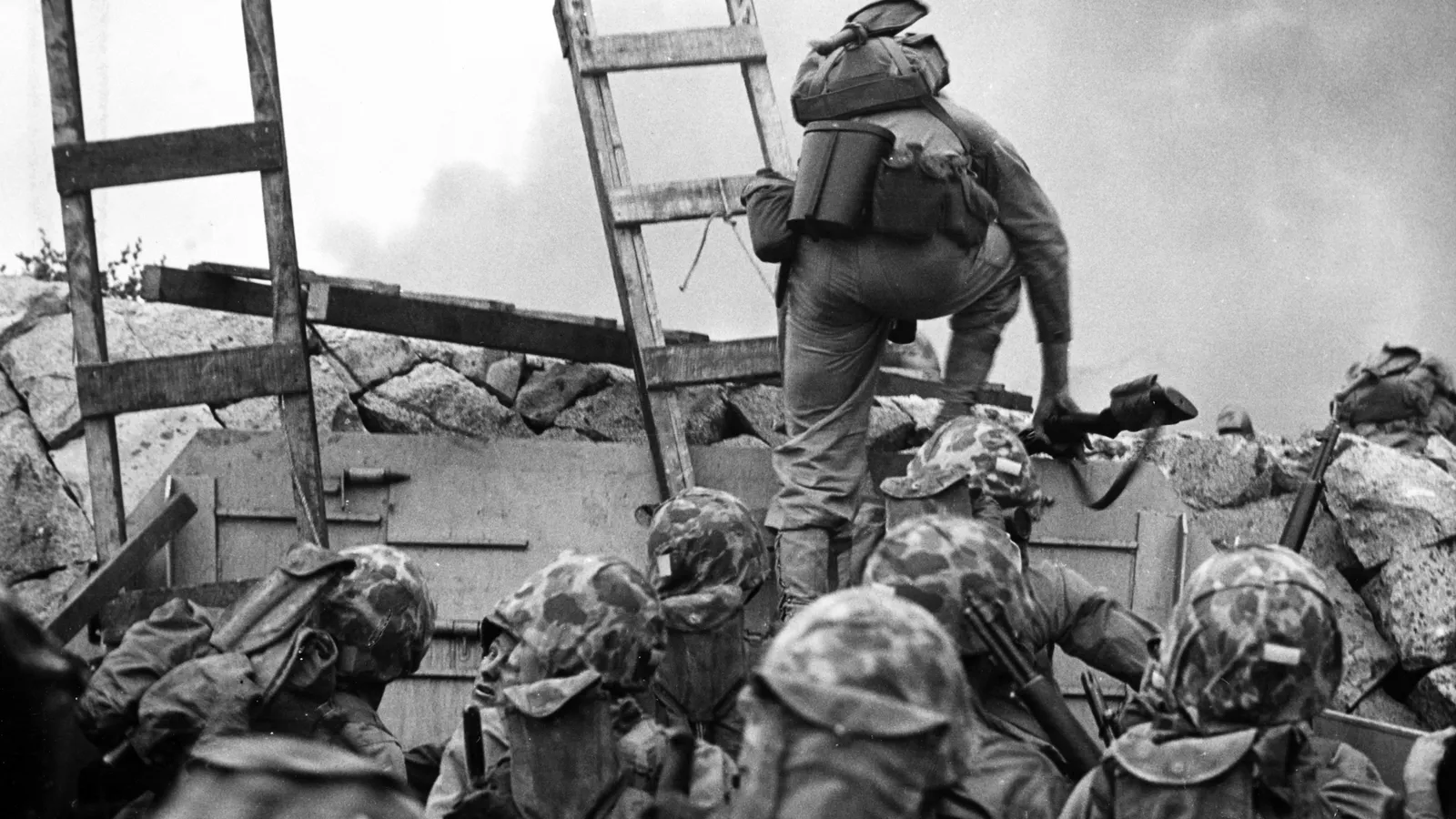
To get in at all, ships had to funnel through Flying Fish Channel — narrow, easily mined, and dominated by the small fortified island of Wolmido sitting right in the harbor’s mouth. A defender holding Wolmido in strength could have torn the invasion fleet apart in a channel with no room to maneuver. And because Inchon had no ordinary beaches, Marines wouldn’t be wading ashore across sand. They’d be hitting seawalls several feet high, the same walls built to hold back those brutal tides, climbing them on ladders under fire in the middle of a working port city.
Commander Arlie G. Capps, one of the officers on the amphibious planning staff, put it as bluntly as anyone did. The harbor, he said, had:
“Every natural and geographic handicap.”
MacArthur turned that same list of hazards into his central argument. No sane commander would expect an amphibious assault at a place this hard to attack — which was exactly why attacking there stood the best chance of catching everyone off guard.
Wolmido Island Falls First
Naval and air bombardment opened the operation around September 10, cruisers and destroyers hammering Wolmido’s defenses while carrier aircraft hit targets across the wider Inchon area. The shelling did two jobs at once: it wore down the island’s defenses, and the weak return fire told American commanders that North Korean defenses here were much thinner than elsewhere on the coast.
At 6:30 a.m. on September 15, 3rd Battalion, 5th Marines hit Green Beach on Wolmido. The garrison fought, but it was outmatched and cut off; the island was in Marine hands by noon. American losses were startlingly light, around fourteen casualties. North Korean losses ran past 200 killed and 136 captured, mostly artillery and marine troops stationed there. With Wolmido gone, the guns that could have raked the approach channel later that day fell silent, and the fleet had a few hours to wait out the tide before the main assault.
The Marines Scale the Seawalls
The main landings came late that afternoon, timed to the next high tide. At 5:24 p.m., Regimental Combat Team 5 hit Red Beach, straight into the seawalls fronting Inchon itself. No beach to cross — just ladders propped against the walls, Marines climbing under fire, then fanning out to take Cemetery Hill, Observatory Hill, and the rise by the British consulate, high ground that dominated the port and kept North Korean defenders from massing a real counterattack. Six minutes later, at 5:30, the 1st Marine Regiment — led by the famously aggressive Colonel Lewis “Chesty” Puller — landed at Blue Beach, about four miles southeast, coming in over three waves to anchor the southern flank and cut the roads out of the city.
The fighting inside Inchon that night was messy rather than light. North Korean troops fought from buildings and dug-in positions through the dark, and Marines spent the night clearing them out block by block. By the morning of September 16 the beachhead held, the city was largely in Marine hands, and the 7th Infantry Division was coming ashore to widen the perimeter and free the Marines to move inland. Total losses across the landing, from the first bombardment through securing the beachhead, came to roughly 224 UN troops killed and 809 wounded, against North Korean losses estimated past 1,350 killed — a lopsided result that proved, in barely a day, everything MacArthur had argued about surprise beating caution.
The Fight for Seoul
Taking Inchon turned out to be the hard, uncertain part. What came after was a fifteen-mile push toward Seoul against a North Korean command still reeling from the shock. X Corps moved inland through the back half of September, pushing past disorganized resistance while Pyongyang scrambled to pull forces — including at least one division yanked off the Pusan front — back to defend the capital before it was too late.
The fight for Seoul, roughly September 20 through 28, cost far more than the landing had. North Korean troops, reinforced in pieces as units arrived from the south and from garrisons around the city, fought from barricades and rubble and gutted buildings block by block, and the battle turned into brutal street fighting rather than the fast collapse MacArthur had hoped for. X Corps had to force a crossing of the Han River before the house-to-house fighting even started, and once inside the city, North Korean defenders used barricaded intersections and rooftops to slow the advance for days. American dead ran into the hundreds, South Korean forces took losses of their own alongside them, and North Korean casualties in the battle for the city are estimated in the thousands killed, with thousands more taken prisoner as organized resistance finally broke down. Some historians of the campaign think pressure to retake the capital fast, instead of encircling it more patiently, pushed the fighting into frontal assaults through the most heavily defended parts of the city — though accounts differ on whether that pressure came mostly from Almond’s corps or from MacArthur’s headquarters in Tokyo.
The Capital Restored
Late on September 25, 1950, Major General Almond announced Seoul had been liberated, almost exactly three months after North Korean troops first took it. The next afternoon, MacArthur’s headquarters made it official in United Nations Command Communiqué 9:
“Seoul, the capital of the Republic of Korea, is again in friendly hands.”
Mopping-up fighting dragged on in parts of the city for days even after that announcement, and the capital handed back to South Korea was a wrecked one, its streets torn up by weeks of occupation and days of urban combat. Within days MacArthur flew to Seoul himself for a ceremony restoring civil administration to South Korean President Syngman Rhee — a fitting close to a campaign that had flipped the war’s momentum in about two weeks.
Collapse in the South: The Pusan Breakout
Inchon’s effect on the rest of the war showed up almost immediately. With North Korean forces around Seoul in disarray and their supply lines south cut, the KPA divisions still fighting at Pusan found themselves running low on ammunition with no real hope of reinforcement. Eighth Army felt the shift and launched its own breakout on September 16, the day after the landings, and North Korean resistance along the perimeter started crumbling within days. Six weeks of grinding, static defense turned, almost overnight, into a general North Korean retreat.
Squeezed between Eighth Army pushing north out of Pusan and X Corps pushing south and east from Seoul, thousands of North Korean troops got cut off, killed, or captured trying to get back across the 38th parallel. Within about a month of the landing, UN forces had taken more than 100,000 North Korean prisoners, and what was left of the invasion force streamed north in a retreat that looked nothing like the disciplined army that had come south in June. By early October, UN and South Korean troops stood back at the 38th parallel, the prewar border, having achieved the war’s original goal of restoring South Korean sovereignty.
Overconfidence and the Road to the Yalu
Inchon didn’t just reverse the military situation. It changed how MacArthur, and a lot of Washington, thought about the risks still ahead. The speed of the North Korean collapse fed a growing belief that the war could be finished outright, not by restoring the old border but by chasing the shattered KPA north and unifying the whole peninsula under Seoul. UN troops crossed the 38th parallel in early October, took Pyongyang by October 19, and MacArthur kept pushing toward the Yalu River and the Chinese border, convinced the war was essentially won and that Chinese intervention, if it came at all, would be small and manageable.
That confidence turned out to be badly wrong. Chinese forces had been massing across the Yalu for weeks, and in late November 1950 they hit UN forces in overwhelming numbers — a string of defeats that included the brutal fighting retreat from the Chosin Reservoir and drove UN forces back down the peninsula in a headlong withdrawal. Seoul would change hands twice more before the front finally settled down. Inchon didn’t cause what came next; the decision to push for the Yalu, and the intelligence failures that brushed off clear warnings about Chinese intent, belonged to MacArthur alone. But most historians think the sheer momentum of Inchon’s near-flawless success hardened his confidence at exactly the wrong moment, and that helps explain why warnings about China got waved off so easily by a command that had, just weeks before, been proven right against almost universal doubt.
Legacy of an Audacious Gamble
Inchon is still one of the most studied amphibious operations in modern military history, taught at service academies not just for what it achieved but for the very obstacles that made it look impossible beforehand. It belongs alongside Normandy as an example of amphibious warfare pulled off against hard terrain and real resistance, though its biggest enemy wasn’t the garrison defending the harbor. It was the tide. Planners studying Inchon today treat it as a case study in calculated risk — proof that extreme technical and geographic hazards, understood and used rather than just avoided, can become the source of surprise instead of the reason to call something off.
It also sits in a messier place in the history of military decision-making generally. Inchon gets cited as proof that bold individual judgment can beat cautious institutional consensus. It gets cited, just as often, as a warning about what happens when a commander’s confidence, validated once in spectacular fashion, goes unchecked in the campaign that follows. Both are true, and both trace back to the same three weeks in 1950.
The landing also settled an argument that had nothing to do with Korea. In the years right after World War II, the Marine Corps had faced repeated pushes in Washington to fold its combat role into the Army, on the theory that a standalone amphibious force was an expensive leftover from a war already won. It’s a debate that resurfaces almost every time a defense budget gets tight, and Inchon is still the answer Marine officers reach for first. The speed and skill of the 1st Marine Division’s landing, on a coastline the Army and Navy had both judged nearly unworkable, did more to kill that argument than any hearing on Capitol Hill could have. And because Inchon combined naval gunfire, carrier aviation, and a genuinely complicated ship-to-shore sequence into one tightly run operation, it’s still a standard case study for the kind of joint-service coordination later amphibious doctrine — from Da Nang to the Falklands to the Gulf War — tried to copy.
Quick Facts
- Dates: September 10–19, 1950 (preparatory bombardment September 10–15; landings and beachhead consolidation September 15–19)
- Location: Inchon, on Korea’s west coast, roughly 25 miles from Seoul
- Codename: Operation Chromite
- UN Commander: General Douglas MacArthur, Supreme Commander, UN Command
- Naval Commander: Vice Admiral Arthur Dewey Struble (Joint Task Force 7); Rear Admiral James H. Doyle (Attack Force)
- Ground Commander: Major General Edward M. Almond, X Corps
- Marine Division Commander: Major General Oliver P. Smith, 1st Marine Division
- UN Naval Force: 261 ships from seven nations
- UN Ground Troops (X Corps): Approximately 40,000
- Tidal Range: Averaged 29 feet, up to 36 feet at extremes — among the largest in the world
- UN Casualties at Inchon: Approximately 224 killed, 809 wounded
- North Korean Casualties at Inchon: Estimated over 1,350 killed
- Seoul Recaptured: Announced September 25–26, 1950
Timeline of Key Events
- June 25, 1950 — North Korea invades South Korea across the 38th parallel
- June 28, 1950 — Seoul falls to North Korean forces
- July 5, 1950 — First American ground combat of the war, at Osan
- July 23, 1950 — Operation Chromite formally proposed as the codename for a landing at Inchon
- August 4 – September 18, 1950 — UN and South Korean forces defend the Pusan Perimeter
- August 23, 1950 — MacArthur briefs skeptical Joint Chiefs representatives in Tokyo and wins approval to proceed
- August 28, 1950 — Joint Chiefs of Staff formally approve Operation Chromite
- September 10–15, 1950 — Preparatory naval and air bombardment of Wolmido and Inchon
- September 15, 1950, 6:30 a.m. — Marines land on Wolmido island (Green Beach)
- September 15, 1950, 5:24–5:30 p.m. — Main landings at Red Beach and Blue Beach
- September 16, 1950 — Eighth Army begins its breakout from the Pusan Perimeter
- September 20–28, 1950 — Battle for Seoul
- September 25–26, 1950 — Seoul’s liberation announced and confirmed by UN Command Communiqué 9
- October 1, 1950 — South Korean forces cross the 38th parallel moving north
- October 19, 1950 — UN forces capture Pyongyang
- Late November 1950 — Chinese forces intervene in massive strength, reversing UN gains
Frequently Asked Questions
Why did MacArthur choose Inchon despite the enormous risks?
He believed the harbor’s hazards — the tides, the narrow channel, the seawalls — were exactly why North Korean commanders would never see an assault coming there. A landing that close to Seoul would cut the KPA’s supply lines to its forces fighting at Pusan, which a safer landing site farther away couldn’t do.
Who actually planned and led the Inchon landing?
MacArthur pushed the operation through, but the technical planning was mostly Rear Admiral James H. Doyle’s staff work. Vice Admiral Arthur Dewey Struble commanded the naval task force overall, Major General Edward Almond led X Corps ashore, and Major General Oliver P. Smith commanded the 1st Marine Division that spearheaded the landing.
How difficult were Inchon’s tides, really?
The range averaged around 29 feet and hit as much as 36 at extremes, among the widest anywhere in the world. At low tide the harbor became miles of mudflats that landing craft couldn’t cross, leaving only a few hours around high tide for any landing to happen at all — and the conditions needed wouldn’t line up again for about a month after mid-September 1950.
Did the Marines really have to climb ladders over seawalls?
Yes. Inchon had no conventional beaches, so troops at Red Beach came ashore straight into harbor seawalls and climbed them with ladders under fire instead of crossing open sand the way a typical landing would go.
How did Inchon affect the wider war?
It cut North Korean supply lines to the forces besieging Pusan, which let Eighth Army break out just a day later. Within about a month, UN forces had taken more than 100,000 North Korean prisoners, and what was left of the invading army was in retreat north of the 38th parallel.
Did Inchon’s success contribute to later disaster in the war?
Indirectly, yes. Most historians think the scale of the win fed MacArthur’s confidence that the war could be finished by pushing all the way to the Yalu River, discounting clear warning signs about China. When Chinese forces attacked in overwhelming strength in late November 1950, UN troops were driven back down the peninsula in one of the war’s costliest reversals.
Recommended Reading
- Robert Debs Heinl Jr., Victory at High Tide: The Inchon-Seoul Campaign (1968)
- Bill Sloan, The Darkest Summer: Pusan and Inchon 1950 — The Battles That Saved South Korea, and the Marines, from Extinction (2009)
- David Halberstam, The Coldest Winter: America and the Korean War (2007)
- Clay Blair, The Forgotten War: America in Korea, 1950–1953 (1987)
- Max Hastings, The Korean War (1987)
Read Next
August 14, 2026
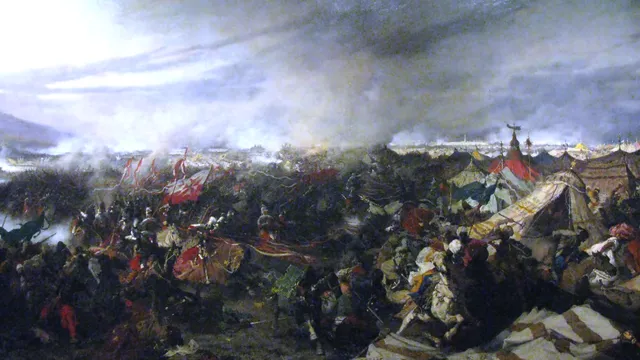
The Siege of Vienna: How the Ottoman Advance Into Europe Was Stopped
In 1683 a Polish-led relief army broke the Ottoman siege of Vienna in a massive cavalry charge, halting Ottoman expansion into Central Europe for good.
August 14, 2026
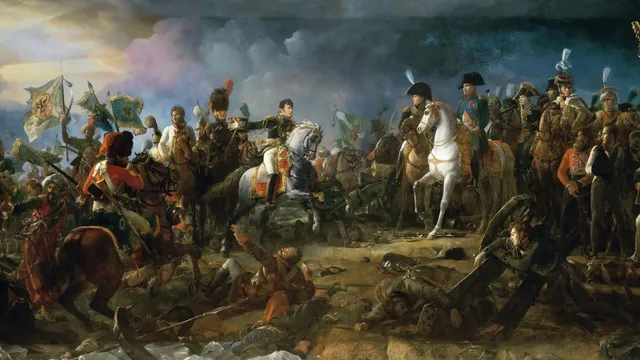
The Battle of Austerlitz: Napoleon's Greatest Victory
How Napoleon lured a larger Russian-Austrian army into a trap at Austerlitz in 1805, winning his most decisive victory and shattering the Third Coalition.
August 14, 2026
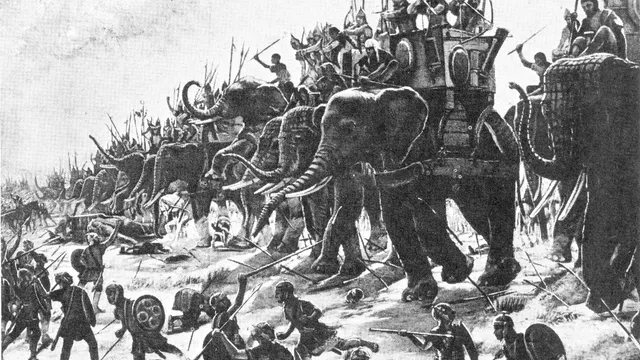
The Battle of Zama: Scipio's Defeat of Hannibal
How Scipio Africanus out-generaled Hannibal Barca at Zama in 202 BC, using Masinissa's cavalry and elephant-countering tactics to end the Second Punic War.